Productive disagreement depends on how people feel about each other. We spend a lot of time thinking about how to argue, and not enough on how to shape the relationship that will define how the engagement goes. It’s often said that in order to disagree well, people need to put emotions aside and think purely rationally, but this is a myth. … | Ian Leslie Continue reading Productive Disagreement Depends on How People Feel About Each Other Ian Leslie
The new kind of business hero must learn to operate without the might of the hierarchy behind them. The crutch of authority must be thrown away and replaced by their own ability to make relationships, use influence and work with others to achieve results. | Rosabeth Moss Kanter Continue reading Operating Without Hierarchy Rosabeth Moss Kanter
If I were to summarize in one sentence the single most important principle I have learned in the field of interpersonal relations, it would be this: Seek first to understand, then to be understood. | Stephen R. Covey Continue reading Seek First to Understand, Then to Be Understood Stephen R. Covey
A positive relationship is one in which two people listen, communicate clearly without judgment, respect, and trust each other, as well as support, encourage, and help each other on a practical and emotional level. | David Gurteen Continue reading What Is a Positive Relationship? David Gurteen

People: David Gurteen (1)David Gurteen Keynote speaker, writer and conversational facilitatorBooks: David Gurteen (80)A Conversation Architect Designs Strategic Conversations David GurteenAPM Conference: Conversational Leadership David Gurteen (2016)Being Truthful Versus Telling the Truth David GurteenChatbot Constraints David GurteenChatbots as Critical Thinking Partners – Talk for Bibliotheca Alexandrina David Gurteen (2024)Chatbots Lack Nuanced Communication Skills David GurteenChatbots Continue reading What I Learnt as International Czar David Gurteen (2005)

The more traditional forms of leadership based on static hierarchies and professional distance between leaders and followers are growing increasingly outdated and ineffective. As organizations face more complex interdependent tasks, leadership must become more personal to guarantee open, trusting communication that will make collaborative problem solving and innovation possible. AustraliaAustriaBrazilCanadaChinaCzech RepublicEgyptFranceGermanyGlobalIndiaItalyJapanMexicoNetherlandsPolandSaudia ArabiaSingaporeSpainTurkeyUAEUnited KingdomUnited States Continue reading Humble Leadership: the Power of Relationships, Openness and Trust by Edgar H. Schein, Peter A. Schein (2018)
We’re crazy, We’re living on crazy ideas about love, about relationships, about happiness, about joy, about everything. | Anthony de Mello Continue reading We’re Crazy Anthony de Mello
We must establish a personal connection with each other. Connection before content. Without relatedness, no work can occur. | Peter Block Continue reading Connection Before Content – Without Relatedness, No Work Can Occur Peter Block
The Speed of Trust by Stephen M. R. Covey explores the role of trust in business, organizations, and personal relationships. The main concept of the book is that trust is the basis of successful relationships, leadership, business, and society as a whole. Covey argues that trust can provide organizations and individuals with immense competitive advantages, Continue reading The SPEED of Trust: the One Thing That Changes Everything By Stephen M. R. Covey (2006)
Relationship and connectedness are the pre-condition for change. Every meeting, every process, every training program has to get people connected first. Otherwise, the content falls on deaf ears. So small groups are an essential building block to any future you want to create. | Peter Block Continue reading Relationship and Connectedness Are the Pre-condition for Change Peter Block
Someone once told me that the power in all relationships lies with whoever cares less, and he was right. But power isn’t happiness, and I think that maybe happiness comes from caring more about people rather than less … Credit: Connor Mead in the film Ghosts of Girlfriends Past Source: Ghosts of Girlfriends PastTags: care Continue reading The Power in All Relationships Lies with Whoever Cares Less Connor Mead in the film Ghosts of Girlfriends Past (2009)
A relationship is a set of mutual expectations about each other’s future behavior based on past interactions with one another. We have a relationship when we can anticipate each other’s behavior to some degree. When we say we have a ‘good relationship’, this means that we feel a certain level of comfort with the other person, comfort that is based … | Edgar Schein and Peter Schein Continue reading What Is a Relationship? Edgar Schein and Peter Schein
Despite current ads and slogans, the world doesn’t change one person at a time. It changes when networks of relationships form among people who share a common cause and vision of what’s possible. This is good news for those of us intent on creating a positive future. Rather than worry about critical mass, our work is to foster critical … | Meg Wheatley Continue reading The World Doesn’t Change One Person at a Time Meg Wheatley
Relationships are all there is. Everything in the universe only exists because it is in relationship to everything else. Nothing exists in isolation. We have to stop pretending we are individuals that can go it alone. | Meg Wheatley Continue reading Relationships Are All There Is Meg Wheatley

We often think of information as something that can be stored or transmitted. But if it does not change how something is seen or understood, is it really information? A relational view helps us see information not as a thing, but as something that happens between patterns and perception. Information Emerges Through RelationshipRethinking information through Bateson’s relational lensWe often think … Continue reading Stop Treating Information as a Thing Change Insight

Most change initiatives begin with trying to change individuals, but lasting change rarely starts there. Interaction, not the individual, is the primary unit of change. Continue reading Interaction as the Primary Unit of Change Is not the individual, it’s the interaction

Conversations shape how we connect, collaborate, and solve problems. Groups often struggle to focus on the right issues, approach discussions constructively, or build a sense of community. Asking thoughtful questions can guide meaningful dialogue, ensuring conversations address vital needs, encourage participation, and strengthen relationships. Continue reading Three Questions for Meaningful Conversations Clarify focus, approach, and community-building in discussions

Small group conversations are at the heart of Conversational Leadership, but there are several challenges to be overcome if they are to be effective. Continue reading Introduction: Small Group Conversations Small groups are an essential building block to any future you want to create

The Impact of Cognitive Biases in Conversation Spirituality Close Pop-up all posts in this chapter What’s the Vibe? Please be patient as this may take up to a minute to load… Close Edgar and Peter Schein’s four levels of relationship: Level Minus 1: Total impersonal domination and coercion. Level 1: Transactional role and rule-based supervision, Continue reading Relationships ** The way in which two or more people are connected


A community is more than just a group of people with shared interests. Many networks and organizations call themselves communities, but they often lack the deeper connections that make a real community. True communities grow over time through meaningful relationships, shared purpose, and mutual care—not through design or construction. Continue reading What Makes a Real Community? Members of a community care about each other
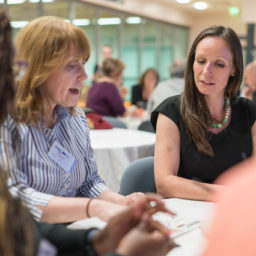
Connect more: Connect with people more broadly and more deeply. We are becoming more connected with each other and less connected with each other at the same time. Continue reading Connect More Connect more broadly, more deeply

Admit when you are wrong: We find it difficult to admit when we are wrong. Our relationships and personal development are negatively affected by this. What can we do to improve our ability to admit we’re wrong? Continue reading Owning Our Mistakes ** Learning how admitting we’re wrong strengthens relationships and personal growth

Teams often lose momentum when they don’t pause to connect. Long meetings aren’t always the answer. A short, informal huddle can keep communication flowing and priorities clear without disrupting the day. Continue reading The Power of Team Huddles How brief team gatherings can align, motivate, and connect

Trust is the force that holds our society together. It is the glue that connects us, builds communities, and is one of the foundations on which society depends. It is vital for society to function. Our civilization would collapse totally without it. Continue reading Exploring the Multifaceted Roles of Trust in Relationships and Society Without trust our civilization would collapse