

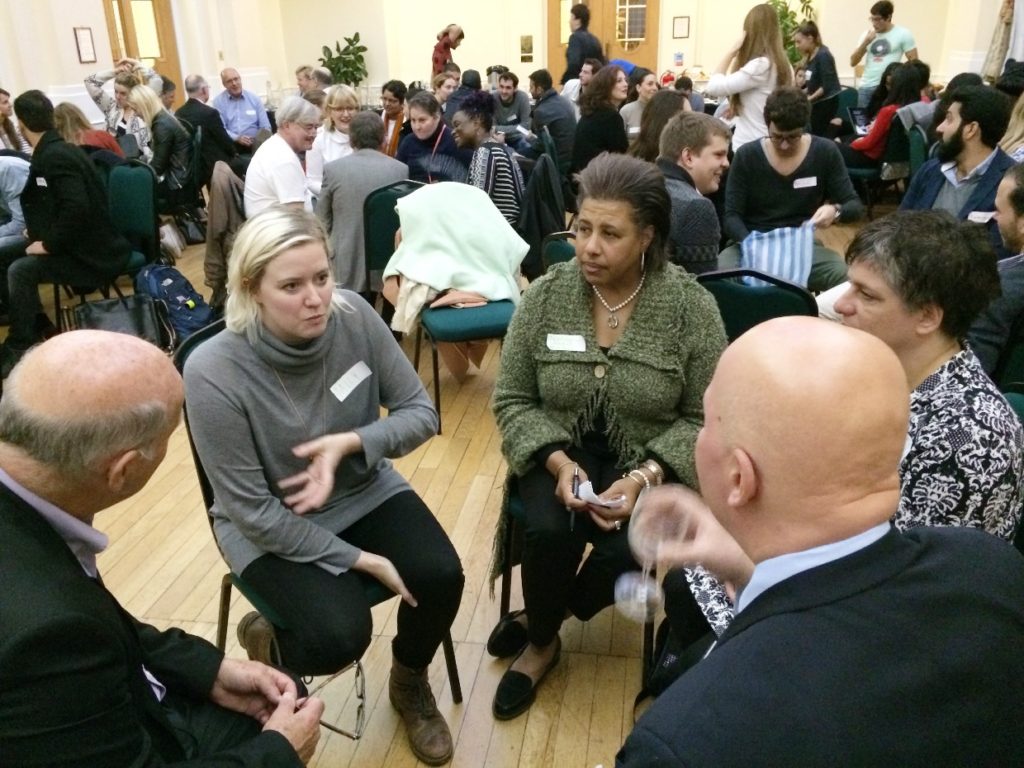
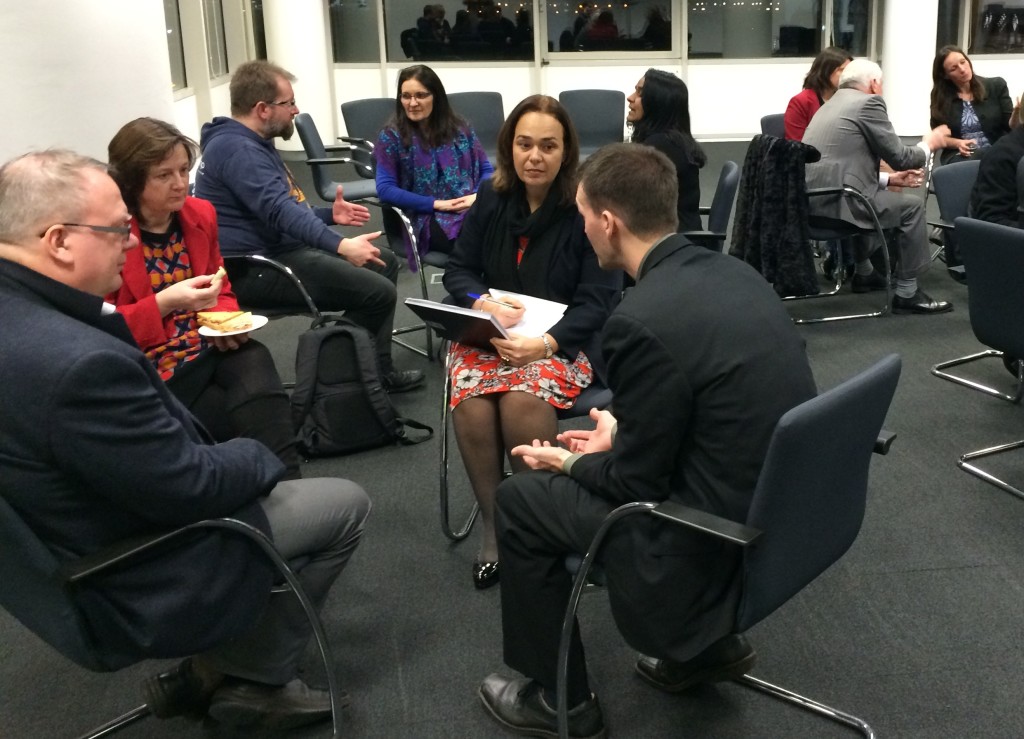
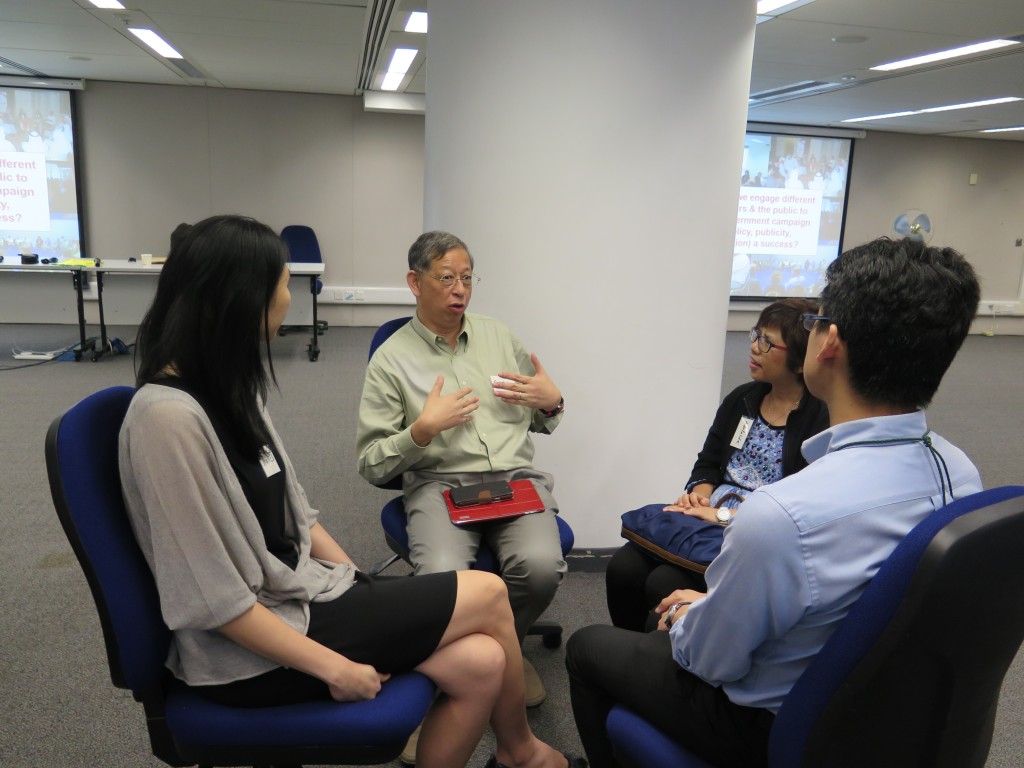
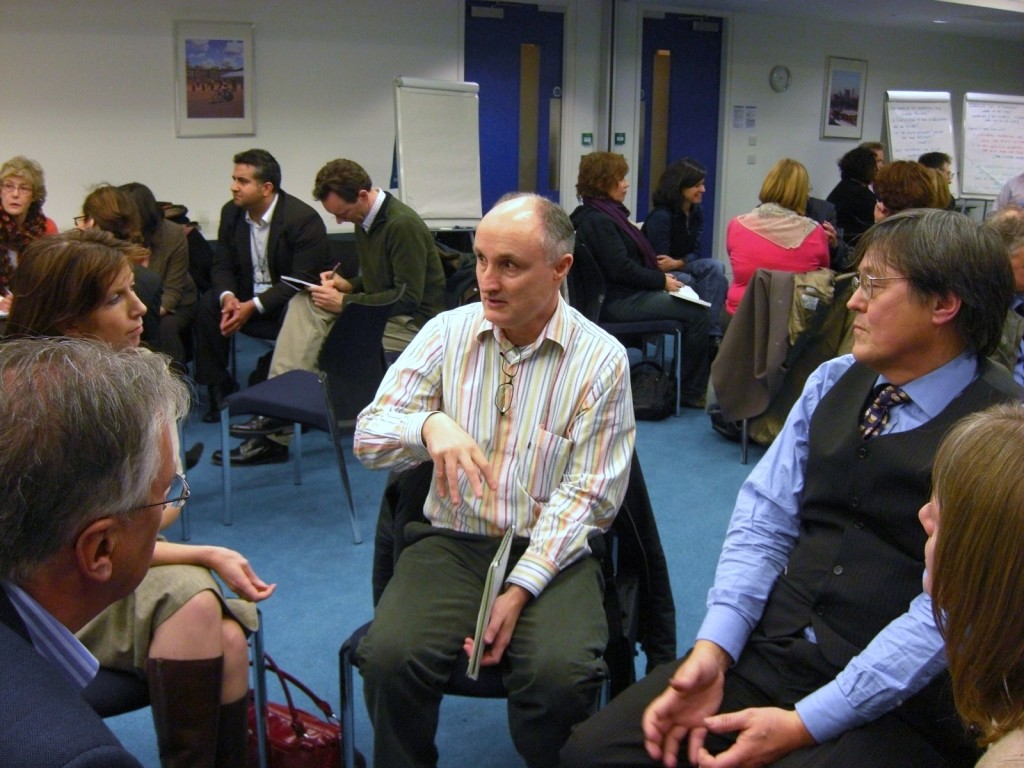
Sometimes, when running a Knowledge Café, if the room is too small and the number of participants large, it is necessary to run the Café without tables. This is not ideal.
I have learned over the years that although it is tempting not to have any tables as they can get in the way of the conversation, and although many facilitators suggest not having them, by and large, they are to be preferred – just keep them small.
There is a strange phenomenon where people merge groups after each round of conversation, and the groups progressively grow.
- Round one: 3 or 4 people per group: some people move chairs, and you end up with 4 or 5 per group
- Round two: some whole groups merge, and they end up 7 or 8 per group
- Round three: most groups are now eight people or more
You can tell people not to do this, but mostly you will be ignored.
Why keep the groups small? It improves the quality of the conversations, and it avoids social loafing.
Conversational Leadership is the practice of creating space for what needs to be said. Coaching helps you develop this capacity in real, grounded ways.