Reading Time: 2 minutes
The Neuroscience Behind Human Communication | Dr. Fiona Kerr
Gates Foundation on Conversational Intelligence | Judith Gasner
Conversational Intelligence | Judith Gasner
Neuroscience and the Roots of Human Connections | The Social Synapse
Storytelling, Psychology and Neuroscience | Amanda D’Annucci
Explanation of “amygdala hijacks” | Daniel Goleman
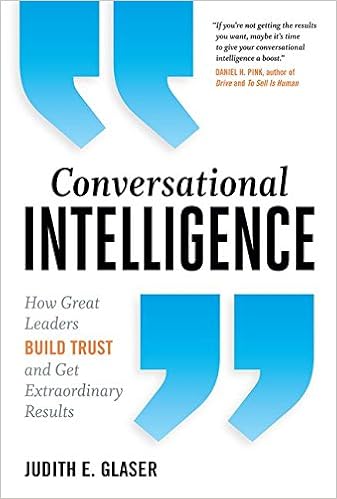
Image Credits: DALL-E (Public Domain)


Conversation is not just an interactive communication between two or more people, it causes a change of emotions by inducing the brain to secrete a variety of hormones and it triggers the firing of mirror neurons that influence empathy. In short, conversation is far more complex than we appreciate.
I am currently researching this topic. I have just a few resources here for now.
The Neuroscience Behind Human Communication | Dr. Fiona Kerr
Gates Foundation on Conversational Intelligence | Judith Gasner
Conversational Intelligence | Judith Gasner
Neuroscience and the Roots of Human Connections | The Social Synapse
Storytelling, Psychology and Neuroscience | Amanda D’Annucci
Explanation of “amygdala hijacks” | Daniel Goleman
Resources
- Psychology Today: The Neuroscience of Conversations by Nicklas Balboa, Judith Glaser and Richard Glaser
- HBR: The Neurochemistry of Positive Conversations by Judith Glaser and Richard Glaser
- Yale News: Neurobiology of conversation: Brain activity depends on who you’re talking to by Bill Hathaway
- Article: The Neuroscience Of Conversation by David Amerland
- Scientific American: The Neuroscience of Taking Turns in a Conversation by Melissa J. Coleman, Eric Fortune
- Article: Study Reveals Brain Networks Enabling Human Conversation
Detailed Resources
- Harvard Business Review: The Neurochemistry of Positive Conversations by Judith E. Glaser and Richard D. Glaser (2014)
Status: Stub.
POST NAVIGATION
CHAPTER NAVIGATION
SEARCH
Blook Search
Google Web Search
Google Site Search
(Public Domain)This page is part of a blook on Conversational Leadership. Parts of this book have restricted access. You can learn more about the book and how to obtain full access on the home page.
Gurteen Knowledge Cafés & Workshops
Join one of my upcoming Knowledge Cafés or workshops and explore Conversational Leadership in practice.
Engage in thoughtful conversation, challenge assumptions, and connect with others working in knowledge, leadership, and organisational change.