The Cynefin Framework | Dave Snowden Posts that link to this post We Humans Are Complex Human socio-technical systems are complexPeople: Dave Snowden (1)Dave Snowden Management ConsultantPosts: Dave Snowden (6)Carpe Diem – Seize the Day Seize the day everyoneChanging People ** The challenge of trying to change peopleConversations Through the Cynefin Lens Unraveling the intricacies of Continue reading The Cynefin Framework Dave Snowden

In this book, The Scout Mindset, Julia Galef explains that we see what we want to see when it comes to what we believe. In other words, we have what Julia Galef calls a “soldier” mindset. From tribalism and wishful thinking to rationalizing in our personal lives and everything in between, we are driven to Continue reading Scout Mindset: Why Some People See Things Clearly and Others Don’t by Julia Galef (2021)

Without dialogue, we extinguish ideas, we cover up wrongdoing, the quality of our decision-making deteriorates and our engagement plummets. | Megan Reitz Continue reading Without Dialogue Megan Reitz

Reasoning is often viewed as a tool for improving knowledge and making sound decisions. Yet research shows it frequently reinforces bias and distorts judgement. The argumentative theory reframes reasoning as a social tool for persuasion and evaluation, explaining both our failures alone and our strengths in dialogue. Abstract Reasoning is generally seen as a means Continue reading Why Do Humans Reason? Arguments for an Argumentative Theory Hugo Mercier and Dan Sperber (2010)

Daniel Kahneman is a psychologist and economist notable for his work on the psychology of judgment and decision-making, as well as behavioral economics. Thinking, Fast and Slow | Daniel Kahneman WikipediaDaniel KahnemanYouTubeDaniel KahnemanGoogleDaniel KahnemanBooks: Daniel Kahneman (3)Belief Coherence Daniel KahnemanFor Some of Our Most Important Beliefs, We Have No Evidence at All Daniel KahnemanThinking, Fast Continue reading Daniel Kahneman Psychologist and behavioral economist
AustraliaAustriaBrazilCanadaChinaCzech RepublicEgyptFranceGermanyGlobalIndiaItalyJapanMexicoNetherlandsPolandSaudia ArabiaSingaporeSpainTurkeyUAEUnited KingdomUnited States As an Amazon Associate, I earn a small commission when you purchase a book via this site. People: Daniel Kahneman (1)Daniel Kahneman Psychologist and behavioral economistBooks: Daniel Kahneman (3)Belief Coherence Daniel KahnemanDaniel Kahneman Psychologist and behavioral economistFor Some of Our Most Important Beliefs, We Have No Evidence at Continue reading Thinking, Fast and Slow Daniel Kahneman (2012)
In its broadest sense, politics is the actions or activities of a person or group to influence or control decisions and the outcomes of those decisions within a specific group context, e.g., a country, community, or organization. These actions or activities include gaining power or helping others achieve power and consequently influencing or controlling the decisions and outcomes. | David Gurteen Continue reading What Is Politics? The actions or activities of a person or group to influence decision-making
Abstract The aggregation of many independent estimates can outperform the most accurate individual judgment. This centenarian finding, popularly known as the ‘wisdom of crowds’, has been applied to problems ranging from the diagnosis of cancer to financial forecasting. It is widely believed that social influence undermines collective wisdom by reducing the diversity of opinions within Continue reading Aggregated Knowledge From a Small Number of Debates Outperforms the Wisdom of Large Crowds Joaquin Navajas, Tamara Niella, Gerry Garbulsky, Bahador Bahrami and Mariano Sigman (December 2018)
Introduction The objective is simple: “Better decision-making.” The only issue is that there are so many different views over what we mean by “better.” At the core of all decision-making is the need to balance Power with Responsibility, as the vehicle for resolving the “better” question. This article explores why that is so difficult? It Continue reading The Issues at the Core of Ethical Decision-making and Leadership Bruce Lloyd (2009)
video player How can groups make good decisions? | Mariano Sigman and Dan Ariely Mariano closes this talk with the . You can read the transcript below. Partial Transcript Good collective decisions require two components: deliberation and diversity of opinions. Right now, the way we typically make our voice heard in many societies is through Continue reading How Can Groups Make Good Decisions? Mariano Sigman and Dan Ariely (2017)
In this book, Red Teaming, Bryce Hoffman shows how the most innovative and disruptive companies, such as Google and Toyota, employ Red Teaming techniques. A red team is a team that is formed with the objective of subjecting an organization’s plans, programmes, ideas, and assumptions to rigorous analysis and challenge. He also shows how many Continue reading Red Teaming: How Your Business Can Conquer the Competition by Challenging Everything by Bryce G. Hoffman (2017)
Steven Sloman is a Professor of Cognitive, Linguistic, and Psychological Sciences at Brown University. Steven studies how people think: how we reason, make decisions and form attitudes and beliefs. WebsiteSloman LabYouTubeSteven SlomanGoogleSteven SlomanPosts: Steven Sloman (1)The Knowledge Delusion We know far less than we think we doBooks: Steven Sloman (6)Our Beliefs Are Not Isolated Pieces Continue reading Steven Sloman Professor of Cognitive, Linguistic and Psychological Sciences
We should not conclude from this that everything depends on waves of irrational psychology. On the contrary, the state of long-term expectation is often steady, and, even when it is not, the other factors exert their compensating effects. We are merely reminding ourselves that human decisions affecting the future, whether personal or political or economic, cannot depend on strict mathematical … | John Maynard Keynes Continue reading Whim or Sentiment or Chance John Maynard Keynes
People have some crazy opinions. Generally, these are the opinions that we disagree with. The standard view in both academia and the wider culture is that people have such opinions due to knowledge deficits; they are lacking information. On this view, providing information and critical reasoning skills is the best way to get opinions to converge, … | Steven Sloman Continue reading People Have Some Crazy Opinions Steven Sloman
My personal feeling is that this is how any further improvement of the world will be done: by individuals making Quality decisions and that’s all. God, I don’t want to have any more enthusiasm for big programs full of social planning for big masses of people that leave individual Quality out. These can be left alone for a while. There’s a place … | Robert M. Pirsig Continue reading Only Individuals Making Quality Decisions Will Improve the World Robert M. Pirsig
Abstract Many executives are surprised when previously successful leadership approaches fail in new situations, but different contexts call for different kinds of responses. Before addressing a situation, leaders need to recognize which context governs it -and tailor their actions accordingly. Snowden and Boone have formed a new perspective on leadership and decision making that’s based Continue reading A Leader’s Framework for Decision Making David J. Snowden and Mary E. Boone (2007)
Distinguishing between misinformation and disinformation is crucial. Misinformation comes from those who genuinely believe what they say, while disinformation involves deliberate deception, cover-ups, or the spreading of falsehoods. Differentiating between them can be challenging, and even trusted sources may inadvertently spread misinformation. | David Gurteen Continue reading Distinguishing Between Misinformation and Disinformation Is Crucial David Gurteen
To make better sense of the world, improve decision making, strategizing, and innovation we need to convene small groups of people to engage in creative conversations triggered by powerful questions. | David Gurteen Continue reading Making Better Sense of the World David Gurteen
A clear, succinct 5 minutes introduction to Dave Snowden’s Cynefin Framework by Jennifer Garvey Berger. Making Sense of Complexity – an introduction to Cynefin | Jennifer Garvey Berger Posts where this video is embedded Jennifer Garvey Berger Developmental coach and author The Cynefin Framework A conceptual framework to help make decisionsPeople: Jennifer Garvey Berger (1)Jennifer Garvey Berger Continue reading Making Sense of Complexity – an Introduction to Cynefin Jennifer Garvey Berger (2017)
Ted Cadsby is an author and researcher, writer and speaker on complexity and decision-making. I don’t know Ted and although he does not use the term Conversational Leadership, he does get close when he talks about Complex Leadership. He is one of a handful of people who are writing and talking about the power of Continue reading Ted Cadsby Author and researcher, writer and speaker on complexity and decision-making.
We have always struggled as human beings. But our struggle today is exacerbated by a gap between the increasingly complicated world we have created and the default ways we think about it. Twenty-first-century challenges are qualitatively different from those that generations of our ancestors faced, yet our thinking has not evolved to keep pace. We Continue reading Closing the Mind Gap: Making Smarter Decisions in a Hypercomplex World by Ted Cadsby (2014)
We are drowning in information, while starving for wisdom. The world henceforth will be run by synthesizers, people able to put together the right information at the right time, think critically about it, and make important choices wisely. | E. O. Wilson Continue reading We Are Drowning in Information, While Starving for Wisdom E. O. Wilson
Technology and Democracy: Understanding the influence of online technologies on political behaviour and decision-making Abstract Drawing from many disciplines, the report adopts a behavioural psychology perspective to argue that “social media changes people’s political behaviour”. Four pressure points are identified and analysed in detail: the attention economy; choice architectures; algorithmic content curation; and mis/disinformation. Policy Continue reading Technology and Democracy EU Science Hub (2020)
The Knowledge Illusion | Steven Sloman AustraliaAustriaBrazilCanadaChinaCzech RepublicEgyptFranceGermanyGlobalIndiaItalyJapanMexicoNetherlandsPolandSaudia ArabiaSingaporeSpainTurkeyUAEUnited KingdomUnited States As an Amazon Associate, I earn a small commission when you purchase a book via this site. Posts where this book is embedded Knowledge Is Communal Most of our knowledge resides in other people The Knowledge Delusion We know far less than we Continue reading The Knowledge Illusion: Why We Never Think Alone by Steven Sloman and Philip Fernbach (2018)
Tacit knowledge is a type of knowledge that is difficult to express or communicate through words. It is a vital component of human expertise and plays a crucial role in enabling us to adapt to new situations, solve complex problems, and drive innovation and progress. Continue reading The Importance of Tacit Knowledge Tacit knowledge is knowledge that is difficult to transfer
Ralph Stacey’s book, “Complex Responsive Processes in Organizations: Learning and Knowledge Creation,” delves into the intricacies of organizational dynamics, focusing on the interplay between human behavior, decision-making, and knowledge generation within complex systems. Drawing from complexity theory, Stacey explores how organizations are not merely static structures but evolving, adaptive entities shaped by the actions and Continue reading Complex Responsive Processes in Organizations: Learning and Knowledge Creation by Ralph Stacey (2001)

Knowledge Management has evolved since the mid-90s, shifting from managing information to building collective knowledge. The challenge lies in adapting KM practices to meet today’s complex needs. A four-level framework can provide a structured approach, helping organizations move from information management to supporting agency and communityship. Continue reading The Four Levels of Knowledge Management The relation between Conversational Leadership and Knowledge Management

Business language often assumes the world is stable, measurable, and controllable. In complex contexts, words like maximize, minimize, and optimize quietly overclaim what can be known or achieved. A more honest approach treats decisions as hypotheses, focuses on direction rather than endpoints, and keeps learning open as situations change. Continue reading The Trouble with Optimization in a Complex World What maximizing and minimizing get wrong in complex contexts

Understanding intelligence is important in an era shaped by rapid technological growth. Confusion often arises from unclear ideas about what intelligence really means, making it hard to distinguish between natural and human-made intelligence. Exploring the various types of intelligence and their roles in living beings and technology helps make this complex topic easier to grasp. Continue reading The Spectrum of Intelligence There are many types of intelligence
In complex environments, nothing stands still. Time passes, conditions shift, and action alters what follows. Treating decisions as final closes conversation and hides doubt. Treating decisions as hypotheses keeps learning alive and allows adjustment as the world continues to change. Continue reading A Decision Is Never Final in a Complex World Why decisions work better as hypotheses than conclusions
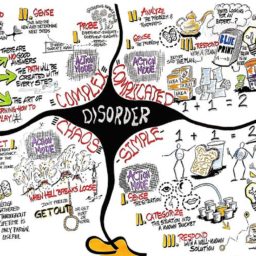
The Cynefin framework helps you make better decisions by helping you understand your situation/context and use an appropriate decision-making method. Continue reading The Cynefin Framework A conceptual framework to help make decisions
Human intelligence is the capacity to acquire, process, and apply knowledge effectively, solving problems, adapting to new situations, and demonstrating creativity and emotional understanding. Continue reading Human Intelligence The capacity to acquire, process, and apply knowledge
Biological intelligence is the natural cognitive abilities and adaptive behaviors of organisms, not including humans or animals, arising through evolution. Continue reading Biological Intelligence The natural cognitive abilities and adaptive behaviors of organisms

Sense-making and meaning-making are often conflated or used interchangeably, but they have distinct meanings. Continue reading Sense-making and Meaning-making The terms have distinct meanings

Filter Bubbles, Epistemic Bubbles and Echo Chambers What Are Beliefs? Close Pop-up all posts in this chapter What’s the Vibe? Please be patient as this may take up to a minute to load… Close If we are to create a better world, we need to make better sense of things and improve the decisions we Continue reading Introduction: Knowledge Delusion We delude ourselves about what we know and how we make decisions
Critical thinking objectively analyzes, evaluates, and synthesizes information to form a reasoned judgment or decision. It involves using logic and reasoning to examine assumptions, arguments, evidence, and alternative perspectives to arrive at well-informed and justified conclusions. Definition: critical thinkingGlossaryCritical thinking is the process of carefully examining information, … Continue reading Critical Thinking ** Analyzing information and arguments to make sound judgments and decisions

What Are Mindsets? What Are Morals? Close Pop-up all posts in this chapter What’s the Vibe? Please be patient as this may take up to a minute to load… Close Values are the basis of personal and collective judgments about what is valuable in life. They influence our decision-making on all sorts of issues, primarily Continue reading Values Values are beliefs we hold that something is good or desirable
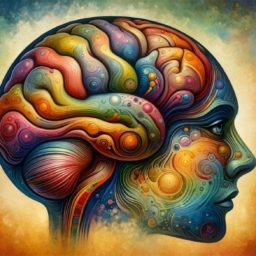
Making sound conclusions is crucial. Distinguishing between deductive, inductive, and abductive reasoning clarifies how we derive these conclusions. Understanding these reasoning forms enhances logical thinking and decision-making. Continue reading Three Forms of Reasoning Understanding deductive, inductive, and abductive logic
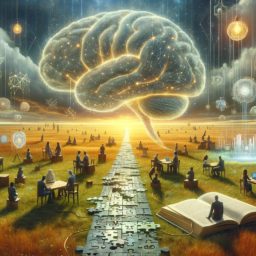
Knowledge and cognition extend beyond our brains, involving people and objects around us. This distributed cognition means our thinking and decision-making are influenced by external factors. Understanding this can improve how we approach problem-solving and collaboration. Continue reading The Extended Mind The power of distributed cognition


In complex work, measurement can help us learn and improve—but only if we’re clear about what matters. Too often, targets are imposed without context, creating distortion instead of insight. A better way is to design measures with those doing the work, turning them into tools for shared understanding. Continue reading Measures, Targets, Rewards and Punishments When a measure becomes a target, it ceases to be a good measure

Idea Campaign Café Question Storming Café ** Close Pop-up all posts in this chapter What’s the Vibe? Please be patient as this may take up to a minute to load… Close The Knowledge Café is not about decision-making but can be combined with other decision-making processes to help make better decisions. How often have you Continue reading Decision Making Café Using the Knowledge Café to make better decisions

The outcomes of a Knowledge Café are not tangible outcomes such as decisions, plans, or consensus. The outcomes are what the participants take away in their heads. Continue reading Knowledge Café Outcomes The outcomes are what you take away in your head

Learn by Talking Introduction: Conversational Learning Close Pop-up all posts in this chapter What’s the Vibe? Please be patient as this may take up to a minute to load… Close How do we make sense of the world so we can act in it? Collective Sensemaking How do we make sense of the world? Sense-making: Continue reading Collective Sense-making The Knowledge Café is a powerful collective sense-making tool

The wisdom of crowds is the concept that large groups of people are collectively smarter than individuals regarding problem-solving, decision-making, and predicting. However, the method can be improved with the wisdom of crowds of crowds. Continue reading Wisdom of Crowds of Crowds Crowds within a crowd outperform ‘wisdom of the crowd’