For all our knowledge, we have no idea what we’re talking about. We don’t understand what’s going on in our business, our market, and our world. Knowledge Management shouldn’t be about helping us to know more. It should be about helping us to understand. So, how do we understand things? It’s through stories that we understand how the world works. | David Weinberger Continue reading For All Our Knowledge, We Have No Idea What We’re Talking About David Weinberger

David Weinberger is a senior researcher at Harvard’s Berkman Klein Center for Internet & Society and was co-director of the Harvard Library Innovation Lab, and a journalism fellow at Harvard’s Shorenstein Center. Ever since I became acquainted with his thinking in The Cluetrain Manifesto in 1999, David has had a huge influence on me. His Continue reading David Weinberger Technologist, professional speaker, and commentator
People implicitly acknowledge that they don’t have all the answers (or else the conversation is really a lecture) and risk being wrong in front of someone else. And conversations overcome the class structure of business, suspending the organization chart at least for a little while. | David Weinberger Continue reading Conversations Overcome the Class Structure of Business David Weinberger
Implicit knowledge isn’t explicit knowledge that we’re not currently thinking about. Implicit knowledge isn’t there the way ore is buried. It’s “there” only in the sense that we can generate it when required. Most simply: That we can come up with an answer doesn’t mean that the answer was lying dormant in us all along. Answering questions is a … | David Weinberger Continue reading Implicit Knowledge Isn’t There the Way Ore Is Buried David Weinberger
We get to knowledge — especially “actionable” knowledge — by having desires and curiosity, through plotting and play, by being wrong more often than right, by talking with others and forming social bonds, by applying methods and then backing away from them, by calculation and serendipity, by rationality and intuition, by institutional processes … | David Weinberger Continue reading We Get to Knowledge by Having Desires and Curiosity David Weinberger
Here’s a definition of that pesky and borderline elitist phrase, ‘knowledge worker’. A knowledge worker is someone whose job entails having really interesting conversations at work. The characteristics of conversations map to the conditions for genuine knowledge generation and sharing: they’re unpredictable interactions among people speaking in their own voice about something they’re interested … | David Weinberger Continue reading What Is a Knowledge Worker? David Weinberger David Weinberger (2000)
To have a conversation, you have to be comfortable being human – acknowledging you don’t have all the answers, being eager to learn from someone else and to build new ideas together. You can only have a conversation if you’re not afraid of being wrong. Otherwise, you’re not conversing, you’re just declaiming, speechifying, or reading what’s on the … | David Weinberger Continue reading Conversations Occur Between Equals David Weinberger

In the book The Cluetrain Manifesto, by Rick Levine, Christopher Locke, Doc Searls, and David Weinberger, the authors explore how the internet reshapes communication between organizations and people. Written as a series of short, direct theses, the book argues that markets are fundamentally conversations, not mechanisms for message control. It challenges the managerial language of Continue reading The Cluetrain Manifesto: the End of Business as Usual by David Weinberger, Rick Levine, Christopher Locke, Doc Searls (2000)

We often confuse knowledge with information. This leads to strategies that prioritise documents and databases over people and understanding. To manage knowledge effectively, we need to view it as something people create and use, rather than something to be stored, and design our practices to support sensemaking, not just storage. Continue reading Knowledge Only Exists in the Mind Everything else is information
Business is a conversation because the defining work of business is conversation – literally. And ‘knowledge workers’ are simply those people whose job consists of having interesting conversations. | David Weinberger Continue reading Business Is a Conversation David Weinberger

We live in a world where more of us work with knowledge than with things. But we rarely ask what it means to be a knowledge worker. It’s not just about information or tools. It’s about how we think, how we act, and how we take responsibility for our own work. Continue reading What Is a Knowledge Worker? A knowledge worker is someone whose job entails having really interesting conversations
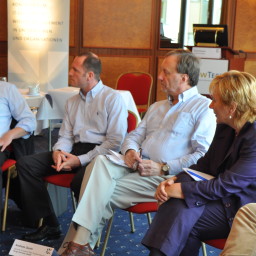
Hard Conversation Conversation Sharpens the Saw Close Pop-up all posts in this chapter What’s the Vibe? Please be patient as this may take up to a minute to load… Close Who gets to decide what makes a useful conversation. You or your manager? In the book The ClueTrain Manifesto, David Weinberger says: It’s always struck Continue reading Let’s Have More Interesting Conversations It’s our job
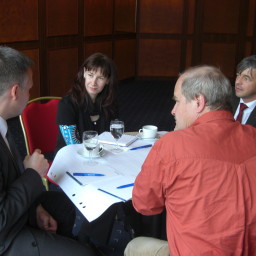
Knowledge Management tends to focus on the management of information in the belief that if we have more information, better quality information, and more accessible information, we will do our jobs better. This belief is just not true. We need more Continue reading We Know So Much but Understand So Little It is through conversation we make sense of the world
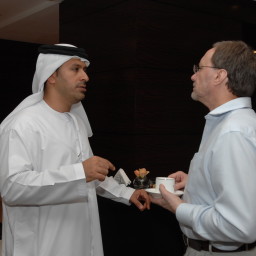
Peer Instruction Vs. Peer Learning Learn by Talking Close Pop-up all posts in this chapter What’s the Vibe? Please be patient as this may take up to a minute to load… Close How can we effectively share knowledge, particularly tacit knowledge, which cannot be easily encoded into information or implicit knowledge that is not consciously Continue reading Sharing Knowledge Through Conversation Knowledge isn’t there the way ore is buried