I put forward formless and unresolved notions, as do those who publish doubtful questions to debate in the schools, not to establish the truth but to seek it. | Michel de Montaigne Continue reading Establishing the Truth Michel de Montaigne
Being truthful means honestly expressing how we perceive or feel about something, though it may not be true. Telling the truth means accurately defining or describing the way things are. | David Gurteen Continue reading Being Truthful Versus Telling the Truth David Gurteen

How your power silences truth | Megan Reitz Posts where this video is embedded Megan Reitz Facilitator, teacher, speaker, executive coach, researcher and author People: Megan Reitz (1)Megan Reitz Facilitator, teacher, speaker, executive coach, researcher and author Books: Megan Reitz (4)Being Silenced and Silencing Others: Developing the Capacity to Speak Truth to Power Megan Reitz, John Continue reading How Your Power Silences Truth Megan Reitz
Few things are more dangerous than people who think they’re in possession of absolute truth. | Peter Boghossian Continue reading Perils of Absolute Certainty Peter Boghossian
Before you speak, let your words pass through three gates: At the first gate, ask yourself “Is it true?” At the second gate ask, “Is it necessary?” At the third gate ask, “Is it kind?” | Rumi Continue reading Before You Speak, Let Your Words Pass Through Three Gates A Sufi saying
The ideal subject of totalitarian rule is not the convinced Nazi or the convinced Communist, but people for whom the distinction between fact and fiction (i.e., the reality of experience) and the distinction between true and false (i.e., the standards of thought) no longer exist. | Hannah Arendt Continue reading Loss of Distinction Hannah Arendt
video player Why do we believe things that aren’t true? | Philip Fernbach Transcript One Transcript starting at 2:10 to 3:38. (I’ve highlighted some of the text to draw attention to the more pertinent points.) As human beings, false belief is our birthright. It stems from fundamental principles that govern the way our minds work Continue reading Why Do We Believe Things That Aren’t True? Philip Fernbach (2017)
By their openness, people dedicated to the truth live in the open, and through the exercise of their courage to live in the open, they become free from fear. | Scott Peck Continue reading People Dedicated to the Truth Live in the Open Scott Peck

Avoid speaking badly of others, even when the information is true. Truth does not justify harm. Words can damage trust, dignity, and relationships. Before speaking, ask whether it is necessary, fair, and constructive. Choosing restraint over criticism is not weakness—it is a practice of responsibility, respect, and thoughtful communication. Don't Speak Badly of Others, Even When It Is … Continue reading Don’t Speak Badly of Others, Even When It Is True Change Insight
No truth is without some mixture of error, and no error so false but that it possesses no element of truth. If a man is in too big a hurry to give up an error, he is liable to give up some truth with it, and in accepting the arguments of the other man he is sure to get some errors with it. Honest argument is merely a process of mutually picking the beams and motes out of each other’s eyes so both … | Wilbur Wright Continue reading No Truth Is Without Some Mixture of Error Wilbur Wright
There are, in fact, four very significant stumbling blocks in the way of grasping the truth, which hinder every man however learned, and scarcely allow anyone to win a clear title to wisdom, namely, the example of weak and unworthy authority, longstanding custom, the feeling of the ignorant crowd, and the hiding of our own ignorance while making a … | Roger Bacon Continue reading The Four Stumbling Blocks to Truth Roger Bacon
Perhaps the essence of the Liberal outlook could be summed up in a new decalogue, not intended to replace the old one but only to supplement it. The Ten Commandments that, as a teacher, I should wish to promulgate, might be set forth as follows: Do not feel absolutely certain of anything. Do not think it worthwhile to produce belief by concealing … | Bertrand Russell Continue reading Bertrand Russell’s Ten Commandments for Critical Thinking Bertrand Russell
There is beauty in truth, even if it’s painful. Those who lie, twist life so that it looks tasty to the lazy, brilliant to the ignorant, and powerful to the weak. But lies only strengthen our defects. They don’t teach anything, help anything, fix anything or cure anything. Nor do they develop one’s character, one’s mind, one’s heart or one’s soul. | José N. Harris Continue reading There Is Beauty in Truth, Even If It’s Painful José Harris

Some lies are not meant to deceive but to control. They demand silence, not belief, and punish those who push back. Naming these as bully lies is the first step toward protecting truth, staying grounded, and creating space for honest conversation, even when the pressure is to conform. Continue reading The Bully Lie How obvious falsehoods are used to assert control
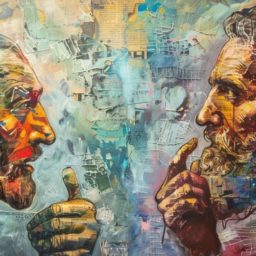
Conversational Leadership emphasizes the importance of intellectual humility and open-mindedness in discussions. Polarization and confirmation bias can stifle productive conversations on complex issues. By asking, “How could we be wrong?” we foster self-reflection, critical thinking, and openness to alternative viewpoints, driving more meaningful dialogue. Continue reading How Could We Be Wrong? Is a crucial question to ask in a conversation
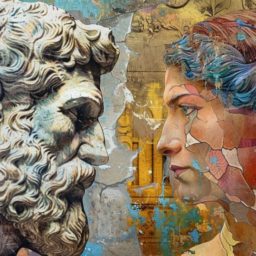
How Could We Be Wrong? Conclusion: Two Pillars of Truth Close Pop-up all posts in this chapter What’s the Vibe? Please be patient as this may take up to a minute to load… Close The pursuit of truth is a fundamental human endeavor. However, arriving at the truth can be challenging, as our beliefs and Continue reading The Two Pillars of Truth How the scientific method and Socratic elenchus underpin civilization
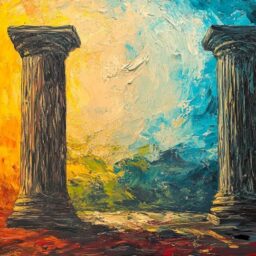
We must recognize that the pursuit of truth and the application of rigorous critical thinking are not merely intellectual exercises, but also moral and civic responsibilities. Engaging in open dialogue and thoughtful conversations is crucial in this process, as it allows us to challenge assumptions, refine our understanding, and collectively work toward more informed and ethical decisions. Continue reading Conclusion: Two Pillars of Truth Critical thinking – a civic duty

Belief systems shape our understanding of reality. They are interconnected networks of ideas, not always accurate representations of truth. Examining and evolving our beliefs, while challenging, is crucial for personal growth and social progress. Continue reading Belief Systems Our beliefs are not isolated pieces of data that we can take and discard at will


Do we listen, to confirm what we already think or do we listen in order to reply? Or do we listen to discover something new? Do we enter into a conversation with a willingness to learn rather than the intent to persuade others to accept our views? Continue reading Learn to Listen and to Tell the Truth Do we listen, to confirm what we already think or do we listen in order to reply?
Show Respect Listen to Ignite Thinking Close Pop-up all posts in this chapter What’s the Vibe? Please be patient as this may take up to a minute to load… Close Tell the truth: Everyone lies. Some big lies, some small lies. Most of the time, individual lies do not matter; they are small and inconsequential. Continue reading Tell the Truth Lies distort the world