The greatest scientific discovery was the discovery of ignorance. Once humans realised how little they knew about the world, they suddenly had a very good reason to seek new knowledge, which opened up the scientific road to progress. | Yuval Noah Harari Continue reading The Greatest Scientific Discovery Was the Discovery of Ignorance Yuval Noah Harari

In this book Enlightenment Now, cognitive scientist Steven Pinker assesses the human condition in the third millennium and urges us to step back from the gory headlines and prophecies of doom, which play to our psychological biases. Instead, follow the data: In seventy-five graphs, Pinker shows that life, health, prosperity, safety, peace, knowledge, and happiness Continue reading Enlightenment Now: the Case for Reason, Science, Humanism, and Progress by Steven Pinker (2019)
A real society comprises hundreds of millions of social beings, each with a trillion-synapse brain, who pursue their well-being while affecting the well-being of others in complex networks with massive positive and negative externalities, many of them historically unprecedented. It is bound to defy any simple narrative of what will happen under a … | Steven Pinker Continue reading A Rational Approach to Politics Is to Treat Societies as Ongoing Experiments Steven Pinker
Reason tells us that political deliberation would be most fruitful if it treated governance more like scientific experimentation and less like an extreme-sports competition. | Steven Pinker Continue reading Treating Governance Like Scientific Experimentation Steven Pinker

Posts where this video is embedded The Enlightenment The Age of Reason The London Coffeehouses of the Enlightenment Centers of Enlightenment thinkingPeople: Steven Johnson (1)Steven Johnson Popular science authorBooks: Steven Johnson (2)Steven Johnson Popular science authorWhere Good Ideas Come From Steven Johnson (2010)Videos: Steven Johnson (1)Where Good Ideas Come From Steven Johnson (2010)Tags: ideas (21) | innovation Continue reading Did Coffee Fuel the Age of Enlightenment? Steven Johnson (2009)
Posts where this video is embedded Enlightenment 2.0 A New Enlightenment for the 21st centuryBooks: Peter B. Kaufman (1)The New Enlightenment and the Fight to Free Knowledge By Peter B. Kaufman (2021)Tags: Enlightenment 2.0 (12) | Peter B. Kaufman (2) | The Enlightenment (28) Carl Sagan – Prophetic Last Interview Science Is Reconsidering Evolution Google Web Continue reading The New Enlightenment and the Fight to Free Knowledge Peter B. Kaufman
Posts where this video is embedded Enlightenment 2.0 A New Enlightenment for the 21st centuryPeople: Steven Pinker (1)Steven Pinker Cognitive psychologist, linguist, and authorBooks: Steven Pinker (5)A Rational Approach to Politics Is to Treat Societies as Ongoing Experiments Steven PinkerEnlightenment Now: the Case for Reason, Science, Humanism, and Progress by Steven Pinker (2019)Rationality: What It Is, Continue reading A New Enlightenment Steven Pinker (2020)

Understanding our Political Nature: How to put knowledge and reason at the heart of political decision-making Abstract Recognising that advances in behavioural, decision and social sciences demonstrate that we are not purely rational beings, this report brings new insights into our political behaviour and this understanding have the potential to address some of the current Continue reading Understanding Our Political Nature EU Science Hub (2019)
Posts where this video is embedded Enlightenment 2.0 A New Enlightenment for the 21st centuryPosts: Ashley Hodgson (1)Multipolar Traps or Moloch Traps Acting against our collective interestsBooks: Ashley Hodgson (1)Multipolar Traps or Moloch Traps Acting against our collective interestsTags: Ashley Hodgson (2) | Enlightenment 2.0 (12) | The Enlightenment (28) A New Enlightenment Two Worlds Google Continue reading The New Enligthenment Ashley Hodgson (2023)
Technology and Democracy: Understanding the influence of online technologies on political behaviour and decision-making Abstract Drawing from many disciplines, the report adopts a behavioural psychology perspective to argue that “social media changes people’s political behaviour”. Four pressure points are identified and analysed in detail: the attention economy; choice architectures; algorithmic content curation; and mis/disinformation. Policy Continue reading Technology and Democracy EU Science Hub (2020)
In the book Enlightenment 2.0, Joseph Heath outlines a program for a second Enlightenment. The answer, he argues, lies in a new “slow politics.” It takes as its point of departure recent psychological and philosophical research that identifies the social and environmental preconditions for the exercise of rational thought. It is impossible to restore sanity Continue reading Enlightenment 2.0: Restoring Sanity to Our Politics, Our Economy, and Our Lives by Joseph Heath (2014)
Values and Identities – a policymaker’s guide Abstract This report presents the state-of-the-art scientific knowledge on Values and Identities from an interdisciplinary perspective. Values are said to be the dominating forces in life and Identities represent who we are and to whom we belong. Both shape the political landscape in democracies and have gained in Continue reading Values and Identities – a Policymaker’s Guide EU Science Hub (2021)
[As a result of the Enligtenment ] Man no longer saw the world as a God-given reality, but as a site of possibility for everything that could be useful, charitable and life-promoting, an immense field of operation for the pursuit and enhancement of the forces of pure reason, which dares to do anything, is fearful of nothing and cannot be disappointed by anything. | Egon Friedell Continue reading Man No Longer Saw the World as a God-given Reality Egon Friedell
David Randall’s “Conversational Enlightenment” explores the 18th century’s “conversation boom” in literature, philosophy, art, and society. He shows how conversation expanded beyond elites, influencing politeness, public opinion, and even art. He argues it wasn’t just chatter but a tool for shaping ideas & the Enlightenment itself. He challenges traditional views, highlighting salons & women’s role Continue reading The Conversational Enlightenment: the Reconception of Rhetoric in Eighteenth-century Thought David Randall (2020)

Many people hold back their ideas or stay quiet in groups. That silence weakens conversations and leaves potential unheard. Speaking with care and showing up with honesty helps everyone see more clearly. Continue reading Don’t Hide Your Light Under a Bushel ** Why speaking up matters in conversation and leadership

Human knowledge has evolved over millennia, shaping our societies and cultures. However, we often overlook the broad historical context of how knowledge developed. Understanding the history of knowledge helps us navigate the present and make informed decisions for the future. Continue reading A Brief History of Knowledge 200,000 years of human history

The scientific method has evolved to solve problems through rigorous inquiry. Facing global issues requires clear, evidence-based approaches. Historical insights into this method can help guide our complex decision-making today. Continue reading The Roots of the Scientific Method Exploring the history of the scientific method
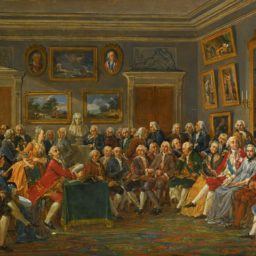
The Enlightenment, known as the “Age of Reason,” was a profound intellectual exploration in the 17th and 18th centuries. It challenged traditional authority by advocating reason, freedom, and secular governance. This shift in thought laid the groundwork for modern political and social structures, emphasizing liberty, progress, and tolerance. Continue reading The Enlightenment The Age of Reason

Conversation has developed alongside human civilization, from simple gestures to complex dialogue. Yet we often ignore its rich history, treating it as casual talk. Tracing its evolution helps us rediscover conversation as a profound human practice shaped by philosophy, culture, and time. Continue reading History of Conversation The changing face of conversation through the ages

The Great Conversation links thinkers, traditions, and questions across thousands of years. Viewing history as separate episodes hides the deeper reality that it is the ongoing conversation of humankind, a dialogue that began around early campfires. Seeing it this way shows that each of us can contribute to this continuing exchange. Continue reading The Great Conversation The evolving dialogue of ideas over millennia

The Enlightenment laid the groundwork for modern society, emphasizing reason and science. Today, we face new global challenges that the original Enlightenment ideals alone cannot fully address. Enlightenment 2.0 seeks to update these principles, integrating diverse perspectives and ethical considerations to navigate the complexities of the 21st century. Continue reading Enlightenment 2.0 A New Enlightenment for the 21st century

Understanding complexity in today’s world requires a new perspective. Traditional methods struggle with the deep interconnectedness of modern systems, leading to unpredictable outcomes. Embracing the concept of entanglement helps us navigate these complexities by recognizing the need for adaptive and integrated approaches. Continue reading From Enlightenment to Entanglement Adapting to the complexities of an interconnected world

The London coffeehouses of the 17th and 18th centuries were the engines of creation that helped drive the Enlightenment, the European intellectual movement that emphasized reason and individualism rather than tradition. Their history is a fascinating one. Continue reading The London Coffeehouses of the Enlightenment Centers of Enlightenment thinking

During the 17th and 18th centuries, Britain witnessed the rise of various gentlemen’s clubs, which served as hubs for intellectual discourse, socializing, and the exchange of ideas. These clubs played a significant role in shaping the intellectual and cultural landscape of the time. Continue reading British Gentlemen’s Clubs Of the 17th and 18th Centuries