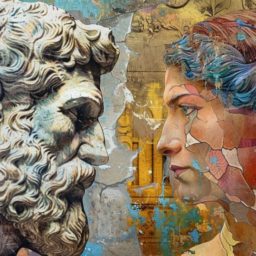
So now, Athenian men, more than on my own behalf must I defend myself, as some may think, but on your behalf, so that you may not make a mistake concerning the gift of god by condemning me. For if you kill me, you will not easily find another such person at all, even if to say in a ludicrous way, attached on the city by the god, like on a large … | Socrates Continue reading Gadfly Socrates
An unexamined life is not worth living. | Socrates Continue reading An Unexamined Life Socrates

This talk by Peter Boghossian at The Ramsay Centre for Western Civilisation explores the applicability and significance of the Socratic method in fostering critical thinking and advancing civilization. Peter begins by highlighting his interest in finding simple, conceptual “bales of hay” to clean up cognitive processes, inspired by a childhood lesson from his father on Continue reading The Socratic Method in the Western Tradition Peter Boghossian (2023)

The Socratic method uses dialogue to stimulate critical thinking and challenge assumptions, aligning closely with the principles of Conversational Leadership. Through probing questions, it encourages open conversation, helping to develop a deeper understanding and intellectual humility. This approach fosters a culture of inquiry, making it a valuable tool in Conversational Leadership for … Continue reading The Socratic Method A powerful tool for critical thinking
The Socratic elenchus is a method of refutation rooted in ancient Greek philosophy. It challenges assumptions through questioning, often exposing contradictions in reasoning. This technique encourages deeper self-awareness and critical thinking, much like Conversational Leadership, by fostering intellectual humility. Its emphasis on open dialogue and inquiry makes it especially relevant in fields … Continue reading The Socratic Elenchus A tool for intellectual discovery

Thinking doesn’t happen only in solitude. It comes alive in conversation, especially when we face tension, contradiction, or competing truths. In times like these, we need to learn how to think with each other, not just talk at or past each other. Continue reading Dialectical Thinking Practicing dialectical thinking in complex times

Democracy’s theoretical ideals clash with citizens’ limited expertise; the loudest voices often prevail over the wisest. Socrates proposed a balanced approach – civic education to cultivate wisdom alongside expert policy guidance to strengthen democratic governance. Continue reading Socrates on Democracy Socrates had a nuanced view of democracy
Socrates on Democracy Voting in a Democracy ** Close Pop-up all posts in this chapter What’s the Vibe? Please be patient as this may take up to a minute to load… Close Socrates’ view on democracy, which emphasized the need for education and wise decision-making, resonates profoundly in modern democratic societies. Today, the challenges he Continue reading Modern Democracy **
The philosophy of conversation investigates the intricate dynamics of human interaction by exploring how we exchange ideas, share experiences, and build relationships through dialogue. By philosophically examining conversation, we gain a deeper understanding of our conversational practices to appreciate dialogue as core to the human experience. Continue reading Philosophy of Conversation Conversation is fundamental to the human experience
Conversations during the time of the ancient Greeks held a significant place in the fabric of their society, serving as a cornerstone in the development of philosophy, democracy, and the arts. Continue reading Conversation in Ancient Greek Society ** Socrates, Plato and Aristotle

The Great Conversation links thinkers, traditions, and questions across thousands of years. Viewing history as separate episodes hides the deeper reality that it is the ongoing conversation of humankind, a dialogue that began around early campfires. Seeing it this way shows that each of us can contribute to this continuing exchange. Continue reading The Great Conversation The evolving dialogue of ideas over millennia
As AI increasingly shapes our world, we need to consider its effect on critical thinking. The Myth of Thamus and Theuth cautions against overreliance on technology for knowledge. Cultivating human understanding alongside AI allows us to benefit from it while preserving crucial reasoning skills. Continue reading Artificial Intelligence and the Quest for Knowledge Exploring the parallels between Plato’s Phaedrus and the challenges of GenAI
How Could We Be Wrong? Conclusion: Two Pillars of Truth Close Pop-up all posts in this chapter What’s the Vibe? Please be patient as this may take up to a minute to load… Close The pursuit of truth is a fundamental human endeavor. However, arriving at the truth can be challenging, as our beliefs and Continue reading The Two Pillars of Truth How the scientific method and Socratic elenchus underpin civilization
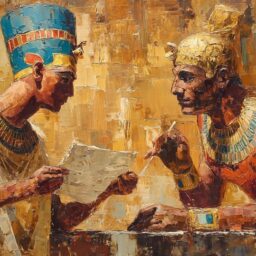
In Plato’s Phaedrus, Socrates shares the myth of Thamus and Theuth, questioning the invention of writing. Writing, he argues, weakens memory and offers the appearance of wisdom without true understanding. Socrates suggests that serious discourse using the dialectic method is a nobler pursuit, leading to genuine wisdom and happiness. Continue reading The Myth of Thamus and Theuth Does writing allow the pretense of understanding, rather than true understanding?