People, Play and Conversation Plato
You can discover more about a person in an hour of play than in a year of conversation. | Plato Continue reading People, Play and Conversation Plato
an online book by David Gurteen
Plato ( PLAY-toe; Greek: Πλάτων, Plátōn; born c. 428–423 BC, died 348/347 BC) was an ancient Greek philosopher of Classical Athens who is most commonly considered the foundational thinker of the Western philosophical tradition.
Credit: Wikipedia - PlatoYou can discover more about a person in an hour of play than in a year of conversation. | Plato Continue reading People, Play and Conversation Plato
Thinking and spoken discourse are the same thing, except that what we call thinking is, precisely, the inward dialogue carried on by the mind with itself without spoken sound. | Plato Continue reading Thinking and Spoken Discourse Plato
This talk by Peter Boghossian at The Ramsay Centre for Western Civilisation explores the applicability and significance of the Socratic method in fostering critical thinking and advancing civilization. Peter begins by highlighting his interest in finding simple, conceptual “bales of hay” to clean up cognitive processes, inspired by a childhood lesson from his father on Continue reading The Socratic Method in the Western Tradition Peter Boghossian (2023)
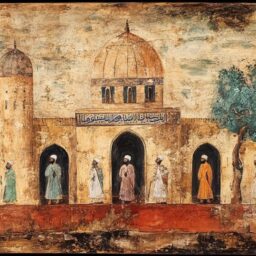
During the Islamic Golden Age, diverse cultures converged in Baghdad’s House of Wisdom, creating a hub that bridged traditions and sparked innovation through collaboration. Its history offers lessons on how shared efforts can drive transformative advancements in science, philosophy, and society. Continue reading The House of Wisdom Innovation Story: An Islamic beacon of innovation and collaboration
Conversation has developed alongside human civilization, from simple gestures to complex dialogue. Yet we often ignore its rich history, treating it as casual talk. Tracing its evolution helps us rediscover conversation as a profound human practice shaped by philosophy, culture, and time. Continue reading History of Conversation The changing face of conversation through the ages
Conversations during the time of the ancient Greeks held a significant place in the fabric of their society, serving as a cornerstone in the development of philosophy, democracy, and the arts. Continue reading Conversation in Ancient Greek Society ** Socrates, Plato and Aristotle
The Great Conversation links thinkers, traditions, and questions across thousands of years. Viewing history as separate episodes hides the deeper reality that it is the ongoing conversation of humankind, a dialogue that began around early campfires. Seeing it this way shows that each of us can contribute to this continuing exchange. Continue reading The Great Conversation The evolving dialogue of ideas over millennia
As AI increasingly shapes our world, we need to consider its effect on critical thinking. The Myth of Thamus and Theuth cautions against overreliance on technology for knowledge. Cultivating human understanding alongside AI allows us to benefit from it while preserving crucial reasoning skills. Continue reading Artificial Intelligence and the Quest for Knowledge Exploring the parallels between Plato’s Phaedrus and the challenges of GenAI
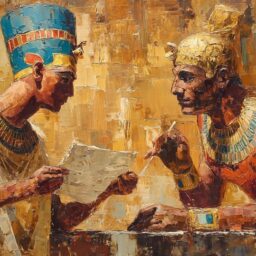
In Plato’s Phaedrus, Socrates shares the myth of Thamus and Theuth, questioning the invention of writing. Writing, he argues, weakens memory and offers the appearance of wisdom without true understanding. Socrates suggests that serious discourse using the dialectic method is a nobler pursuit, leading to genuine wisdom and happiness. Continue reading The Myth of Thamus and Theuth Does writing allow the pretense of understanding, rather than true understanding?