The best argument against Democracy is a five-minute conversation with the average voter. | Winston Churchill Continue reading The Best Argument Against Democracy Misattributed to Winston Churchill
The paradox of democracy is that it entrusts decision-making to those least equipped to make good decisions, yet it remains the best system we have for preventing tyranny and fostering progress. Credit: David Gurteen People: David Gurteen (1)David Gurteen Keynote speaker, writer and conversational facilitatorBooks: David Gurteen (80)A Conversation Architect Designs Strategic Conversations David GurteenAPM Continue reading Democracy: Flawed Yet Indispensable David Gurteen (2024)
Many forms of Government have been tried, and will be tried in this world of sin and woe. No one pretends that democracy is perfect or all-wise. Indeed it has been said that democracy is the worst form of Government except for all those other forms that have been tried from time to time. | Winston Churchill Continue reading Democracy Is Not Perfect Winston Churchill

Abstract This paper compares the debate quality in the plenary sessions of an Irish Citizens’ Assembly and an Irish parliamentary committee to assess the epistemic effects of public deliberation on a contentious subject: abortion. The unusual occurrence of a similar process of detailed discussion on the same topic in different institutions at around the same Continue reading Measuring Epistemic Deliberation on Polarized Issues: the Case of Abortion Provision in Ireland Jane Suiter, David M Farrell , Clodagh Harris and Philip Murphy

Posts where this video is embedded Dan Kahan Professor of Psychology at Yale Law School How Beliefs Shape Reasoning How political views influence the way we interpret dataPeople: Dan Kahan (1)Dan Kahan Professor of Psychology at Yale Law SchoolPosts: Dan Kahan (3)How Beliefs Shape Reasoning How political views influence the way we interpret dataOur Tribal Nature The Continue reading Are Smart People Ruining Democracy? Dan Kahan (2018)
Executive Summary Overview This report provides an evaluation of Climate Assembly UK (CAUK). This was a citizens’ assembly commissioned by six select committees from the House of Commons: Business Energy and Industrial Strategy (BEIS); Environmental Audit; Housing, Communities and Local Government, Science and Technology; Transport; and Treasury. It was tasked with providing recommendations on how Continue reading Evaluation of Climate Assembly UK Stephen Elstub, David M. Farrell, Jayne Carrick and Patricia Mockler (2021)
video player How can groups make good decisions? | Mariano Sigman and Dan Ariely Mariano closes this talk with the . You can read the transcript below. Partial Transcript Good collective decisions require two components: deliberation and diversity of opinions. Right now, the way we typically make our voice heard in many societies is through Continue reading How Can Groups Make Good Decisions? Mariano Sigman and Dan Ariely (2017)
Democracy is a tough way to live. With all its flaws, I think it beats the alternatives. I do not wish to have someone else, no matter how educated, well-intentioned, wealthy, or wise, decide unilaterally what is best for me. Unless we are deeply involved in our work, we cannot feel good about ourselves. Unless we work with others toward valued … | Marvin Weisbord Continue reading Democracy Is a Tough Way to Live Marvin Weisbord
Values and Identities – a policymaker’s guide Abstract This report presents the state-of-the-art scientific knowledge on Values and Identities from an interdisciplinary perspective. Values are said to be the dominating forces in life and Identities represent who we are and to whom we belong. Both shape the political landscape in democracies and have gained in Continue reading Values and Identities – a Policymaker’s Guide EU Science Hub (2021)
Understanding our Political Nature: How to put knowledge and reason at the heart of political decision-making Abstract Recognising that advances in behavioural, decision and social sciences demonstrate that we are not purely rational beings, this report brings new insights into our political behaviour and this understanding have the potential to address some of the current Continue reading Understanding Our Political Nature EU Science Hub (2019)
Our society is dangerously polarised. We don’t listen to each other. Too many of us are separating into ideological tribes. This has to stop. The future of our democracy depends on it. This is what the Munk Debates is all about. Opening minds to different points of view. Challenging groupthink. Debating controversial issues with rigour and honesty. | Munk Debates Continue reading Our Society Is Dangerously Polarised Munk Debates
Science is more than a body of knowledge; it is a way of thinking. I have a foreboding of an America in my children’s or grandchildren’s time — when the United States is a service and information economy; when nearly all the key manufacturing industries have slipped away to other countries; when awesome technological powers are in the hands of a very few, and no one representing the public … | Carl Sagan Continue reading I Have a Foreboding Carl Sagan
Technology and Democracy: Understanding the influence of online technologies on political behaviour and decision-making Abstract Drawing from many disciplines, the report adopts a behavioural psychology perspective to argue that “social media changes people’s political behaviour”. Four pressure points are identified and analysed in detail: the attention economy; choice architectures; algorithmic content curation; and mis/disinformation. Policy Continue reading Technology and Democracy EU Science Hub (2020)
The liberal democracy is an artificial environment, carefully crafted to both contain human nature and convert it into an engine of progress. When we grow up within an artificial habitat that values human inventions like reason and fairness and humanity, it can be easy to forget just how tenuous that environment is. It’s easy to forget that we’re living in a rare anomaly within human history—an … | Tim Urban Continue reading The Liberal Democracy Is an Artificial Environment Tim Urban
This conversation between Matthew Taylor and Rebel Wisdom’s David Fuller covers the destructive impact of new technology, how politics itself is based on bad-faith argumentation, and how a cultural shift is needed to reverse course. Posts where this video is embedded Polarization Is Tearing Us Apart We are polarized across political, religious, moral, and racial dividesTags: Continue reading Polarisation Vs Democracy Matthew Taylor
video player The Future of Reasoning | Michael Stevens Posts where this video is embedded The Argumentative Theory of Human Reason We did not evolve to reason individually but to reason sociallyTags: confirmation bias (5) | Dan Sperber (5) | deliberative democracy (12) | democracy (39) | distributed cognition (6) | extended mind (8) | Hugo Continue reading The Future of Reasoning Michael Stevens
video player How to change your thinking with Daniel Schmachtenberger | Aubrey Marcus (Everyone believes they’re the good guy) Tags: Aubrey Marcus (1) | civilization (22) | Daniel Schmachtenberger (20) | democracy (39) | hyperobjects (1) | social media (7) RSA Knowledge Café Ian Leslie on Conflicted Google Web Search Photo Credits: Midjourney (Public Domain)This page Continue reading How to Change Your Thinking with Daniel Schmachtenberger Aubrey Marcus
A primary object should be the education of our youth in the science of government. In a republic, what species of knowledge can be equally important? And what duty more pressing than communicating it to those who are to be the future guardians of the liberties of the country? | George Washington Continue reading A Primary Object of Education Should Be the Science of Government George Washington
Democray is a conversation … Modern democracy as we know it, it’s built on top of specific information technology. Once the information technology changes, it’s an open question whether democracy can survive. And the biggest danger now is the opposite of what we faced in the Middle Ages.In the Middle Ages, it was impossible to Continue reading Democracy Is a Conversation Yuval Noah Harari (2023)
The people are the only censors of their governors: and even their errors will tend to keep these to the true principles of their institution. To punish these errors too severely would be to suppress the only safeguard of the public liberty. The way to prevent these irregular interpositions of the people is to give them full information of their affairs thro’ the channel of the public papers, & … | Thomas Jefferson Continue reading Newspapers Without a Government Thomas Jefferson
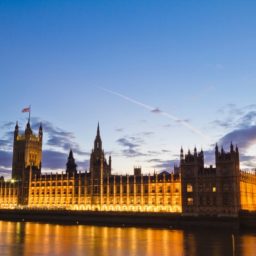
A short video clip of the speed conversation at the start of the Café. Tags: democracy (39) The Stupidity Paradox ## Democracy Café: Houses of Parliament London Google Web Search Photo Credits: Midjourney (Public Domain)This page is part of a blook on Conversational Leadership. Parts of this book have restricted access. You can learn more about the Continue reading Democracy Café, Houses of Parliament ## May 2024
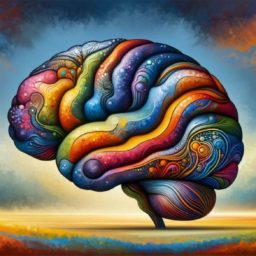
Reasoning is usually treated as a tool for forming sound beliefs and decisions. Yet research on cognitive bias suggests our individual reasoning is often unreliable and shaped by hidden distortions. Social reasoning offers an alternative: we think better together, testing ideas through dialogue and shared critique rather than alone. Continue reading The Argumentative Theory of Human Reason We did not evolve to reason individually but to reason socially
Tolerance Is A Social Contract, Not a Moral Absolute Evolution of Democracy ** Close Pop-up all posts in this chapter What’s the Vibe? Please be patient as this may take up to a minute to load… Close Democracy is a system of government where the power lies with the people. In a democracy, citizens exercise Continue reading Democracy’s Spectrum ** From Direct to Representative
Democracy’s Spectrum ** Socrates on Democracy Close Pop-up all posts in this chapter What’s the Vibe? Please be patient as this may take up to a minute to load… Close Democracy has a rich and complex history that dates back to ancient civilizations. The term itself originates from the Greek words “demos” (people) and “kratos” Continue reading Evolution of Democracy **
Democracy’s theoretical ideals clash with citizens’ limited expertise; the loudest voices often prevail over the wisest. Socrates proposed a balanced approach – civic education to cultivate wisdom alongside expert policy guidance to strengthen democratic governance. Continue reading Socrates on Democracy Socrates had a nuanced view of democracy
Socrates on Democracy Voting in a Democracy ** Close Pop-up all posts in this chapter What’s the Vibe? Please be patient as this may take up to a minute to load… Close Socrates’ view on democracy, which emphasized the need for education and wise decision-making, resonates profoundly in modern democratic societies. Today, the challenges he Continue reading Modern Democracy **
Modern Democracy ** Deliberative Democracy ** Close Pop-up all posts in this chapter What’s the Vibe? Please be patient as this may take up to a minute to load… Close Voting in a democracy is the fundamental process through which citizens participate in their government’s decision-making. It has various advantages and disadvantages. … Continue reading Voting in a Democracy **
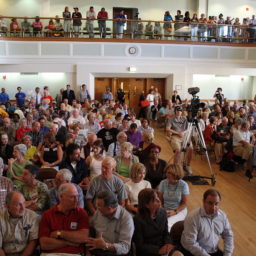
Voting in a Democracy ** Freedom of Speech Close Pop-up all posts in this chapter What’s the Vibe? Please be patient as this may take up to a minute to load… Close Citizens, Assemble! Deliberative Democracy in 3 Minutes What is Deliberative Democracy? When Citizens Assemble Continue reading Deliberative Democracy ** Deliberation is central to decision-making

Polarization is reshaping how we perceive and communicate with one another. Disagreement has turned into division, and conversation into confrontation. We need new ways of talking that rebuild trust, restore understanding, and make it possible to think together across our differences. Continue reading Polarization Is Tearing Us Apart We are polarized across political, religious, moral, and racial divides

Motivated reasoning is where we look for arguments in favor of conclusions we want to believe, regardless of the evidence. This is a primary stumbling block in forming sound beliefs and making good decisions. However, if we are science-curious, we are more likely to explore data contradicting our worldview and are less prone to this bias. Continue reading Science Curiosity A desire to seek out and consume scientific information for pleasure

The wisdom of crowds is the concept that large groups of people are collectively smarter than individuals regarding problem-solving, decision-making, and predicting. However, the method can be improved with the wisdom of crowds of crowds. Continue reading Wisdom of Crowds of Crowds Crowds within a crowd outperform ‘wisdom of the crowd’