video player How can groups make good decisions? | Mariano Sigman and Dan Ariely Mariano closes this talk with the . You can read the transcript below. Partial Transcript Good collective decisions require two components: deliberation and diversity of opinions. Right now, the way we typically make our voice heard in many societies is through Continue reading How Can Groups Make Good Decisions? Mariano Sigman and Dan Ariely (2017)
video player The Future of Reasoning | Michael Stevens Posts where this video is embedded The Argumentative Theory of Human Reason We did not evolve to reason individually but to reason sociallyTags: confirmation bias (5) | Dan Sperber (5) | deliberative democracy (12) | democracy (39) | distributed cognition (6) | extended mind (8) | Hugo Continue reading The Future of Reasoning Michael Stevens

Abstract This paper compares the debate quality in the plenary sessions of an Irish Citizens’ Assembly and an Irish parliamentary committee to assess the epistemic effects of public deliberation on a contentious subject: abortion. The unusual occurrence of a similar process of detailed discussion on the same topic in different institutions at around the same Continue reading Measuring Epistemic Deliberation on Polarized Issues: the Case of Abortion Provision in Ireland Jane Suiter, David M Farrell , Clodagh Harris and Philip Murphy
Executive Summary Overview This report provides an evaluation of Climate Assembly UK (CAUK). This was a citizens’ assembly commissioned by six select committees from the House of Commons: Business Energy and Industrial Strategy (BEIS); Environmental Audit; Housing, Communities and Local Government, Science and Technology; Transport; and Treasury. It was tasked with providing recommendations on how Continue reading Evaluation of Climate Assembly UK Stephen Elstub, David M. Farrell, Jayne Carrick and Patricia Mockler (2021)
Reasoning is usually treated as a tool for forming sound beliefs and decisions. Yet research on cognitive bias suggests our individual reasoning is often unreliable and shaped by hidden distortions. Social reasoning offers an alternative: we think better together, testing ideas through dialogue and shared critique rather than alone. Continue reading The Argumentative Theory of Human Reason We did not evolve to reason individually but to reason socially

Tolerance Is A Social Contract, Not a Moral Absolute Evolution of Democracy ** Close Pop-up all posts in this chapter What’s the Vibe? Please be patient as this may take up to a minute to load… Close Democracy is a system of government where the power lies with the people. In a democracy, citizens exercise Continue reading Democracy’s Spectrum ** From Direct to Representative
Democracy’s Spectrum ** Socrates on Democracy Close Pop-up all posts in this chapter What’s the Vibe? Please be patient as this may take up to a minute to load… Close Democracy has a rich and complex history that dates back to ancient civilizations. The term itself originates from the Greek words “demos” (people) and “kratos” Continue reading Evolution of Democracy **
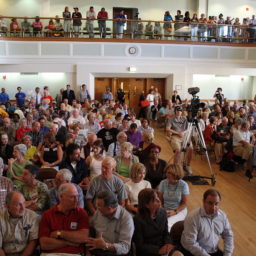
Voting in a Democracy ** Freedom of Speech Close Pop-up all posts in this chapter What’s the Vibe? Please be patient as this may take up to a minute to load… Close Citizens, Assemble! Deliberative Democracy in 3 Minutes What is Deliberative Democracy? When Citizens Assemble Continue reading Deliberative Democracy ** Deliberation is central to decision-making

The wisdom of crowds is the concept that large groups of people are collectively smarter than individuals regarding problem-solving, decision-making, and predicting. However, the method can be improved with the wisdom of crowds of crowds. Continue reading Wisdom of Crowds of Crowds Crowds within a crowd outperform ‘wisdom of the crowd’