Organizational culture emerges organically in organizations, which function as complex adaptive systems. It can’t be dictated by management, but it can be influenced by improving conversational interactions among employees. By cultivating stronger connections between team members, organizations can create an environment where a healthy culture naturally evolves. | David Gurteen Continue reading Cultivating a Healthy Organizational Culture That Naturally Evolves David Gurteen

Patricia Shaw was formerly a professor at the Business School of the University of Hertfordshire, where she co-founded the Complexity and Management Centre in 1995 with Ralph Stacey and Doug Griffin. She was also formerly a Visiting Professor at the Copenhagen Business School. She is now a fellow at Schumacher College. YouTubePatricia ShawGooglePatricia ShawPosts: Patricia Continue reading Patricia Shaw Fellow at Schumacher College
In a complex or complex adaptive system, the notion of “problem-solving” is an illusion. Instead of definitive solutions, there is only an endless series of adaptive responses. | David Gurteen Continue reading There Are No Solutions Only Responses in Complex Adaptive Systems David Gurteen

Ralph Stacey’s book, “Complex Responsive Processes in Organizations: Learning and Knowledge Creation,” delves into the intricacies of organizational dynamics, focusing on the interplay between human behavior, decision-making, and knowledge generation within complex systems. Drawing from complexity theory, Stacey explores how organizations are not merely static structures but evolving, adaptive entities shaped by the actions and Continue reading Complex Responsive Processes in Organizations: Learning and Knowledge Creation by Ralph Stacey (2001)

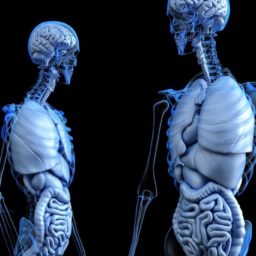
Systems are integral to various aspects of life, from nature to technology. Understanding systems can be challenging due to their complexity and interdependence. By examining their components and relationships, we can gain insights and develop solutions for effectively managing and improving these interconnected processes. Continue reading What Is a System? ** An interconnected set of elements organized in a way that achieves something

Abstract Background Those attempting to implement changes in health care settings often find that intervention efforts do not progress as expected. Unexpected outcomes are often attributed to variation and/or error in implementation processes. We argue that some unanticipated variation in intervention outcomes arises because unexpected conversations emerge during intervention attempts. The purpose of this paper Continue reading The Role of Conversation in Health Care Interventions Enabling sensemaking and learning
The book “Changing Conversations in Organizations” by Patricia Shaw explores a complexity-informed approach to organizational change that focuses on the self-organizing and emergent properties of conversation. Shaw suggests that real change happens through the ongoing, everyday conversations and interactions between people in organizations rather than through structured change programs or interventions designed and controlled by Continue reading Changing Conversations in Organizations: A Complexity Approach to Change by Patricia Shaw (2002)
Distinguishing between complex systems and complex adaptive systems is essential. The challenge is that these terms are often used interchangeably. By understanding the key differences, we can better analyze and predict system behaviors in diverse domains. Continue reading Complex Systems and Complex Adaptive Systems ** Complexity

Many of the systems we work with today comprise numerous interacting components that evolve over time. Traditional ways of analysing systems treat those parts as stable, separate, and predictable. A complex adaptive systems view shifts attention to interaction, emergence, and adaptation as the basis for understanding and action. Continue reading Complex Adaptive Systems ** Complexity

Organizations are dynamic entities shaped by the interactions and relationships of their members. Traditional systems thinking often fails to account for this complexity. Complex Responsive Processes offer an alternative approach, emphasizing local interactions, the emergence of patterns, and the importance of relationships to better understand organizational behavior and change. Continue reading Complex Responsive Processes Ongoing patterns of interaction between people
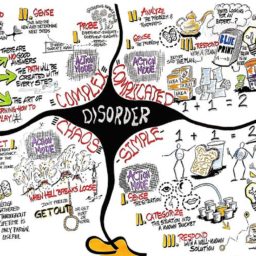
The Cynefin framework helps you make better decisions by helping you understand your situation/context and use an appropriate decision-making method. Continue reading The Cynefin Framework A conceptual framework to help make decisions
Complex Adaptive Systems (CAS) Overview Complex Adaptive Systems (CAS) are systems composed of many interacting components or agents that adapt or learn based on their interactions with each other and their environment. These systems exhibit emergent behavior, meaning that the collective behavior of the system is more complex than the sum of the behaviors of its individual parts. Key … Continue reading Complex Adaptive Systems Vs. Complex Responsive Processes ** Complexity

Conversations are a familiar part of daily life, yet their complexity often goes unnoticed. Beneath the surface, they function as complex, responsive processes, where participants continuously react and adapt to each other. By recognizing the sophisticated dynamics at play, we can better understand these everyday interactions. Continue reading Conversations Are Complex Responsive Processes Conversations are dynamic, emergent interactions shaping organizational reality
Complex systems defy simplistic problem-solving. Rather than definitive solutions, we can only respond to the intricate web of interconnected elements. In a complex environment, there are no solutions, only an endless series of adaptive responses. Continue reading There Are No Solutions to Complex Challenges Only an endless series of adaptive responses
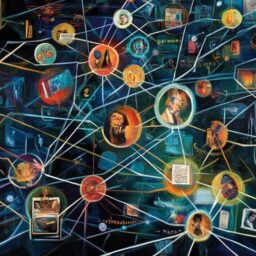
Society is shaped by both human and non-human factors. Traditional thinking often overlooks the influence of non-human entities like technology and infrastructure in driving change. Actor-Network Theory offers a way to understand how these elements interact to create complex systems and influence outcomes. Continue reading Actor-network Theory (ANT) Actor-Network Theory

In our hyperconnected world, complexity has surged, leading to heightened volatility, uncertainty, and ambiguity. This increased complexity poses significant challenges in predicting outcomes, planning for the future, and understanding global events. Continue reading Our World Is Complex It is a VUCA world