This talk by Peter Boghossian at The Ramsay Centre for Western Civilisation explores the applicability and significance of the Socratic method in fostering critical thinking and advancing civilization. Peter begins by highlighting his interest in finding simple, conceptual “bales of hay” to clean up cognitive processes, inspired by a childhood lesson from his father on Continue reading The Socratic Method in the Western Tradition Peter Boghossian (2023)
Transcript My feeling, Charlie, is that pseudoscience, superstition, new-age so-called beliefs, and fundamentalist zealotry are not new. They’ve been with us as long as we’ve been human. However, we now live in an age driven by science and technology, with formidable technological powers. Science and technology are propelling us forward at accelerating rates. If we—the Continue reading Carl Sagan – Prophetic Last Interview Carl Sagan (1995)
Dave Pollard is a writer on culture, complexity, deep ecology, civilization’s collapse, and the sharing economy. Although I have only ever met Dave once, many years ago, through his writing, he has had a considerable influence on me over the years. His insights into the nature of conversation and complexity never cease to provoke my Continue reading Dave Pollard Writer on culture, complexity, ecology, civilization’s collapse and the sharing economy
Daniel Schmachtenberger is a social philosopher and strategist focused on civilization design and global risk mitigation. He co-founded The Consilience Project and explores complex systems, collective intelligence, and the meta-crisis. His work integrates science, ethics, and systems thinking to address existential threats and foster long-term resilience and human flourishing. Daniel Schmachtenberger is a thinker and Continue reading Daniel Schmachtenberger Philosopher and strategist focused on humanity’s long-term viability

In the book Peak Human by Johan Norberg, the author explores why some societies reach extraordinary levels of creativity, prosperity, and freedom before ultimately falling into decline. Drawing on examples from Athens, the Renaissance, the Enlightenment, and the modern era, Norberg examines what allows cultures to prosper and what causes their collapse. He argues that human progress Continue reading Peak Human: What We Can Learn From History’s Greatest Civilizations by Johan Norberg (2025)

It is largely because civilization enables us constantly to profit from knowledge which we individually do not possess and because each individual’s use of his particular knowledge may serve to assist others unknown to him in achieving their ends that men as members of civilized society can pursue their individual ends so much more successfully … | Friedrich Hayek Continue reading Civilization and Communal Knowledge Friedrich Hayek
In this book The Empathic Civilization, Jeremy Rifkin tells the story of the extension of human empathy from the rise of the first great theological civilizations, to the ideological age that dominated the 18th and 19th centuries, the psychological era that characterized much of the 20th century and the emerging dramaturgical period of the 21st Continue reading The Empathic Civilization: the Race to Global Consciousness in a World in Crisis Jeremy Rifkin (2010)
video player How to change your thinking with Daniel Schmachtenberger | Aubrey Marcus (Everyone believes they’re the good guy) Tags: Aubrey Marcus (1) | civilization (22) | Daniel Schmachtenberger (20) | democracy (39) | hyperobjects (1) | social media (7) RSA Knowledge Café Ian Leslie on Conflicted Google Web Search Photo Credits: Midjourney (Public Domain)This page Continue reading How to Change Your Thinking with Daniel Schmachtenberger Aubrey Marcus
If a chimpanzee ventures into the territory of a different group, it will almost certainly be killed. But a New Yorker can fly to Los Angeles–or Borneo–with very little fear. Psychologists have done little to explain this: for years, they have held that our biology puts a hard upper limit–about 150 people–on the size of Continue reading The Human Swarm: How Our Societies Arise, Thrive, and Fall by Mark W. Moffett (2019)
Humiliating to human pride as it may be, we must recognize that the advance and even the preservation of civilization are dependent upon a maximum of opportunity for accidents to happen. | Friedrich Hayek Continue reading The Advance of Civilization Is Dependent Upon the Opportunity for Accidents to Happen Friedrich Hayek
video player In Search of the Third Attractor (part1) | Daniel Schmachtenberger Timestamps Where are we headed as a species? What is the landscape of risks and challenges that we need to confront over the next decades, and are there a small number of key factors that we need to solve to avoid catastrophe? As Continue reading In Search of the Third Attractor (part 1) Daniel Schmachtenberger (2022)
video player In Search of the Third Attractor (part 2) | Daniel Schmachtenberger Timestamps Where are we headed as a species? What is the landscape of risks and challenges that we need to confront over the next decades, and are there a small number of key factors that we need to solve to avoid catastrophe? Continue reading In Search of the Third Attractor (part 2) Daniel Schmachtenberger (2022)
The assumption that technical civilizations must necessarily make an appearance, even after many billions of years of biological evolution, implies that the ultimate purpose, or goal, in the formation of stars and planets is the production of intelligent beings and technical civilizations — an idealistic and teleological view. | Carl Sagan Continue reading The Rise of Technical Civilizations Carl Sagan

The origins of conversation stretch back long before recorded history, evident in oral traditions, myths and records of ancient cultures across the world. Through archaeology and study of early writings, we can piece together the foundations of dialogue that evolved over millennia in human societies. Continue reading The Emergence of Conversation in Early Cultures ** Conversation stretches far back into prehistory
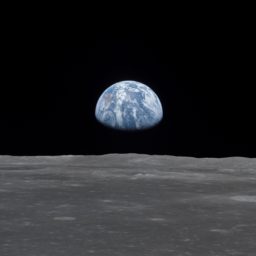
In this chapter, I explore our evolutionary journey, which spans from the moment of the Big Bang to the universe’s eventual destiny. In the context of this journey, I also explore speculation regarding both individual purpose and humanity’s overarching purpose. Continue reading Introduction: Our Evolutionary Journey From the Big Bang to the universe’s death

What Is the Purpose of Humanity ** Introduction: Our Evolutionary Journey Close Pop-up all posts in this chapter What’s the Vibe? Please be patient as this may take up to a minute to load… Close Longtermism is a philosophy focused on doing the most cumulative good possible from a civilization-scale perspective. It argues we should Continue reading The Case for Longtermism How thinking long-term can shape a better future for humanity
How Could We Be Wrong? Conclusion: Two Pillars of Truth Close Pop-up all posts in this chapter What’s the Vibe? Please be patient as this may take up to a minute to load… Close The pursuit of truth is a fundamental human endeavor. However, arriving at the truth can be challenging, as our beliefs and Continue reading The Two Pillars of Truth How the scientific method and Socratic elenchus underpin civilization

We must recognize that the pursuit of truth and the application of rigorous critical thinking are not merely intellectual exercises, but also moral and civic responsibilities. Engaging in open dialogue and thoughtful conversations is crucial in this process, as it allows us to challenge assumptions, refine our understanding, and collectively work toward more informed and ethical decisions. Continue reading Conclusion: Two Pillars of Truth Critical thinking – a civic duty

Despite overall improvements in quality of life, our world faces numerous challenges. Global issues span personal, societal, and environmental domains and threaten long-term sustainability. Addressing these complex problems requires a better understanding and collaboration at all levels. Continue reading The Metacrisis The interconnected crises shaping our world
In our hyperconnected world, complexity has surged, leading to heightened volatility, uncertainty, and ambiguity. This increased complexity poses significant challenges in predicting outcomes, planning for the future, and understanding global events. Continue reading Our World Is Complex It is a VUCA world