Neither deep learning nor other forms of second-wave AI, nor any proposals yet advanced for third-wave, will lead to genuine intelligence. Credit: Brian Cantwell Smith Comment: Can machines truly be intelligent if they lack wisdom, ethical judgment, and adaptability?Source: The Promise of Artificial Intelligence: Reckoning and JudgmentCambridgeTags: artificial general intelligence (6) | artificial intelligence (58) Continue reading The Promise of Artificial Intelligence Brian Cantwell Smith (2019)
The myth is not that true AI is possible. As to that, the future of AI is a scientific unknown. The myth of artificial intelligence is that its arrival is inevitable, and only a matter of time-that we have already embarked on the path that will lead to human-level AI, and then superintelligence. We have not. | Erik J. Larson Continue reading The Myth of Artificial Intelligence Erik J. Larson (2021)
No computer will be fluent in a natural language, pass a severe Turing Test and have full human-like intelligence unless it is fully embedded in normal human society. No computer will be fully embedded in human society as a result of incremental progress based on current techniques | Harry Collins Continue reading Against Humanity’s Surrender to Computers Harry Collins (2018)
Natural intelligent beings evolve through natural selection, while artificial intelligent entities evolve through intentional design by those same intelligent beings. Credit: David Gurteen Tags: artificial intelligence (58) | David Gurteen (93) | intelligence (23) | natural intelligence (2)Google Web Search Photo Credits: Pixabay (Pixabay)Please support my work If you enjoy my work and find it valuable, Continue reading Natural Verses Artificial Intelligence David Gurteen
Success on narrow applications get us not one step closer to general intelligence. The inferences that systems require for general intelligence … cannot be programmed, learned, or engineered with our current knowledge of AI. … No algorithm exists for general intelligence. | Erik J. Larson Continue reading Why Computers Can’t Think the Way We Do Erik J. Larson (2021)
Democray is a conversation … Modern democracy as we know it, it’s built on top of specific information technology. Once the information technology changes, it’s an open question whether democracy can survive. And the biggest danger now is the opposite of what we faced in the Middle Ages.In the Middle Ages, it was impossible to Continue reading Democracy Is a Conversation Yuval Noah Harari (2023)
AI is neither artificial nor intelligent. Rather, artificial intelligence is both embodied and material, made from natural resources, fuel, human labor, infrastructures, logistics, histories, and classifications. AI systems are not autonomous, rational, or able to discern anything without extensive, computationally intensive training with large datasets or predefined rules and rewards. | Kate Crawford Continue reading AI Is Neither Artificial nor Intelligent Kate Crawford (2022)
Close Pop-up All Episodes What Is Knowledge in the Age of AI? This episode explores the nature of knowledge, its distinction from information, and the role of AI in knowledge representation. Clive Holtham, Ron Young, and David Gurteen discuss whether machines can truly possess knowledge or if they only manipulate structured information. Ron reflects on Continue reading In the Age of AI #1: What Is Knowledge? Friday 20th December 2024
ChatGPT’s intelligence is zero, but it’s a revolution in usefulness. | Pascal Kaufmann Continue reading Chatgpt’s Intelligence Is Zero Pascal Kaufmann

In the book Nexus by Yuval Noah Harari, he examines the connections between human history, technology, and the evolution of societies. Harari explores how developments in science and technology influence the way people live, think, and interact, raising questions about the future of human identity and agency. Through historical analysis and contemporary examples, he reflects Continue reading Nexus: A Brief History of Information Networks From the Stone Age to AI Yuval Noah Harari (2024)
In the book, The Coming Wave by Mustafa Suleyman, the co-founder of DeepMind explores how artificial intelligence, synthetic biology, and other transformative technologies are set to reshape society in ways that are both exhilarating and perilous. He argues that we are entering an era of unprecedented innovation, where breakthroughs in AI and bioengineering will democratize Continue reading The Coming Wave Mustafa Suleyman and Michael Bhaskar (2024)
Close Pop-up All Episodes What Is Conversation in the Age of AI? This episode explores the evolving nature of conversation in the age of AI, focusing on human-to-human and human-to-AI interactions. Clive Holtham, Ron Young, and David Gurteen discuss whether AI can engage in meaningful conversations and how it differs from human dialogue. Ron shares Continue reading In the Age of AI #2: What Is Conversation? Thursday 20th February 2025
Close Pop-up All Episodes What is Reason in the Age of AI? The third episode of the “In the Age of AI” podcast explores reasoning in the context of artificial intelligence. The discussion begins by defining reasoning through four types—deductive, inductive, abductive, and analogical—and questions whether AI can truly reason or merely mimic human thought Continue reading In the Age of AI #3: What Is Reason? Thursday 13th March 2025
This chapter examines the role of artificial intelligence (AI) in knowledge management and conversational leadership, with a focus on chatbot technology. More specifically, it explores the emerging potential of leveraging generative AI systems as powerful critical and creative thinking tools. Continue reading Introduction: Artificial Intelligence Human-like intelligence?
Understanding intelligence is important in an era shaped by rapid technological growth. Confusion often arises from unclear ideas about what intelligence really means, making it hard to distinguish between natural and human-made intelligence. Exploring the various types of intelligence and their roles in living beings and technology helps make this complex topic easier to grasp. Continue reading The Spectrum of Intelligence There are many types of intelligence
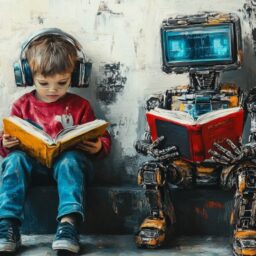
Artificial intelligence fundamentally differs from natural intelligence in its origin and nature. Natural intelligence arises from biological processes, but AI results from human engineering. Consequently, AI lacks the consciousness and emotional complexity of living beings. The term “artificial” aptly captures this difference. Continue reading Artificial and Natural Intelligence Exploring the essential difference between natural and artificial forms of intelligence

Leadership is often seen as providing guidance and security. However, authentic leadership may lie in confronting people with their own freedom, even when they resist it. Understanding this tension can help us rethink power, responsibility, and the choices we make in politics, religion, and the age of AI. Continue reading Peter Block, the Grand Inquisitor, and Leadership Leadership, freedom, and the burden of responsibility
With decades of experience helping individuals and organizations think differently and work more effectively, Ron Young, Clive Holtham, and David Gurteen bring a range of perspectives to one of the most significant forces of our time: Artificial Intelligence. The “In the Age of AI” podcast is about straightforward, unfiltered, and human-centered conversations. We aim to Continue reading In the Age of AI Podcast Exploring how artificial intelligence shapes our thoughts, work, and society
Human intelligence is the capacity to acquire, process, and apply knowledge effectively, solving problems, adapting to new situations, and demonstrating creativity and emotional understanding. Continue reading Human Intelligence The capacity to acquire, process, and apply knowledge
Programmed intelligence is when a machine or software has limited abilities based on its original programming. It cannot learn or adapt on its own. Examples are basic devices like thermostats just following preset rules. They have no flexibility or real understanding. Continue reading Programmed Intelligence Is a thermostat or an electronic calculator intelligent?
Artificial Intelligence (AI) refers to the ability of machines or computer-controlled robots to perform tasks usually associated with human intelligence. Continue reading Artificial Intelligence ** The ability of machines to perform tasks usually associated with human intelligence
Artificial intelligence is evolving rapidly, reshaping our world. Some argue that AI isn’t truly intelligent because it lacks human-like consciousness and emotions. However, this narrow view overlooks AI’s unique strengths and potential to complement human intelligence, driving innovation and progress in tackling complex global challenges. Continue reading Why the Generative AI Intelligence Argument Is Irrelevant Redefining intelligence in the age of GenAI
The Nature of Consciousness Understanding 4E Cognition Close Pop-up all posts in this chapter What’s the Vibe? Please be patient as this may take up to a minute to load… Close The relationship between consciousness and intelligence is complex and not fully understood. Here’s a breakdown of their relationship: Definitions Overlap Consciousness and intelligence are Continue reading The Relationship Between Consciousness and Intelligence ** Both concepts are multifaceted and the relationship is not well understood
Chatbots may seem to possess human intelligence, but they are not intelligent in the same way that we are. It is essential to understand their nature. Continue reading What Are Chatbots? Artificial intelligence programs designed to have conversations with humans
Knowledge Management and artificial intelligence intersect in exciting ways. GenAI tools like ChatGPT are often considered alternatives to traditional search engines like Google. However, in this mode, they primarily help manage information rather than supporting Knowledge Management. Continue reading Chatbots and Genai in Knowledge Management Chatbots are more than just question/answer machines
Knowledge exists in our minds, and traditional methods of encoding this knowledge into information face significant challenges. However, AI tools now offer innovative solutions for recording, transcribing, and processing both explicit and tacit knowledge, revolutionizing how organizations preserve and leverage their intellectual capital. Continue reading From Mind to Information – the Role of AI in Knowledge Encoding The Evolution of Knowledge Encoding
The world faces many intricate challenges that require critical thinking and nuanced analysis. If used creatively, chatbots like ChatGPT, Claude, and Gemini can enhance our critical thinking capacities. By interacting with chatbots innovatively, we can sharpen our skills and tackle complex problems more effectively. Continue reading Chatbots as Critical Thinking Partners Stimulating critical thinking is one of the most powerful application of chatbots

AI language models are transforming creative expression, echoing postproduction art’s remixing practices. Traditional notions of original authorship face challenges in this new landscape. AI enables creators to curate, remix, and collaborate with existing cultural materials in novel ways. Continue reading The Postproduction Paradigm – AI and the Art of Remixing LLMs as catalysts for a remix revolution

Artificial intelligence is reshaping how organizations handle information and knowledge. Many assume it simply replaces traditional Knowledge Management systems and solves the problem. The real challenge, however, is how we think, decide, and act together with AI, which is where Conversational Leadership becomes essential. Continue reading Conversational Leadership in the Age of AI How we think, decide, and act together with intelligent systems

In a complex world facing many challenges, multipolar traps emerge when self-interests conflict with collective well-being, leading to detrimental outcomes. To break free, we need to prioritize collaboration, long-term thinking, and shared goals, working across sectors and nations. Continue reading Multipolar Traps or Moloch Traps Acting against our collective interests

Engage AI in Dialogue: Generative AI introduces new voices into our conversations, expanding how we explore ideas and who gets to participate. Yet it brings no lived experience, no empathy, and no accountability. As machines increasingly mimic human dialogue, we must stay grounded in what is real and relational—using AI with care, without losing the human core of conversation and shared meaning Continue reading Engage AI in Dialogue A Conversational Leadership Practice Area

Turn-taking in Conversation Our Most Powerful Technology Is Conversation Close Pop-up all posts in this chapter What’s the Vibe? Please be patient as this may take up to a minute to load… Close Pask’s Conversation Theory, developed by British cybernetician Gordon Pask in the 1970s, is a conceptual and theoretical framework that explores how learning Continue reading Conversation Theory ** Gordon Pask