

Conversations thrive in spaces designed for closeness. Large tables and wide distances make it hard to connect or listen deeply. Choosing the right table size creates the intimacy and ease needed for genuine dialogue.
The best conversations happen when people are close enough to be within touching distance. Any further apart, and it becomes difficult to maintain the sense of intimacy that good conversation requires. Ideally, a discussion group should consist of three or four people. With this number, everyone has space to contribute, and the conversation remains lively and inclusive.
Here is an ideal room layout and tables for a Knowledge Café:
Gurteen Knowledge Café: RSA Workshop, London, 2011 (source)The table shown below is an ideal size for a Knowledge Café:
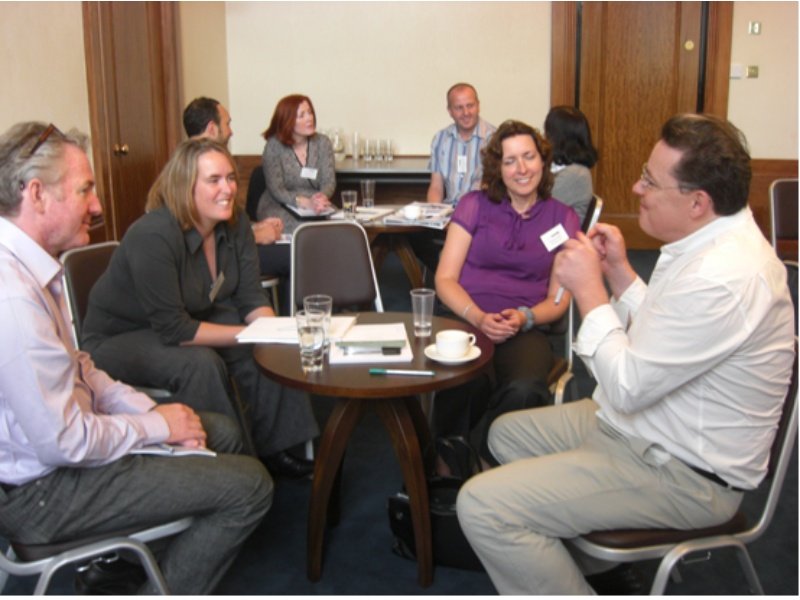
This table also works very well:
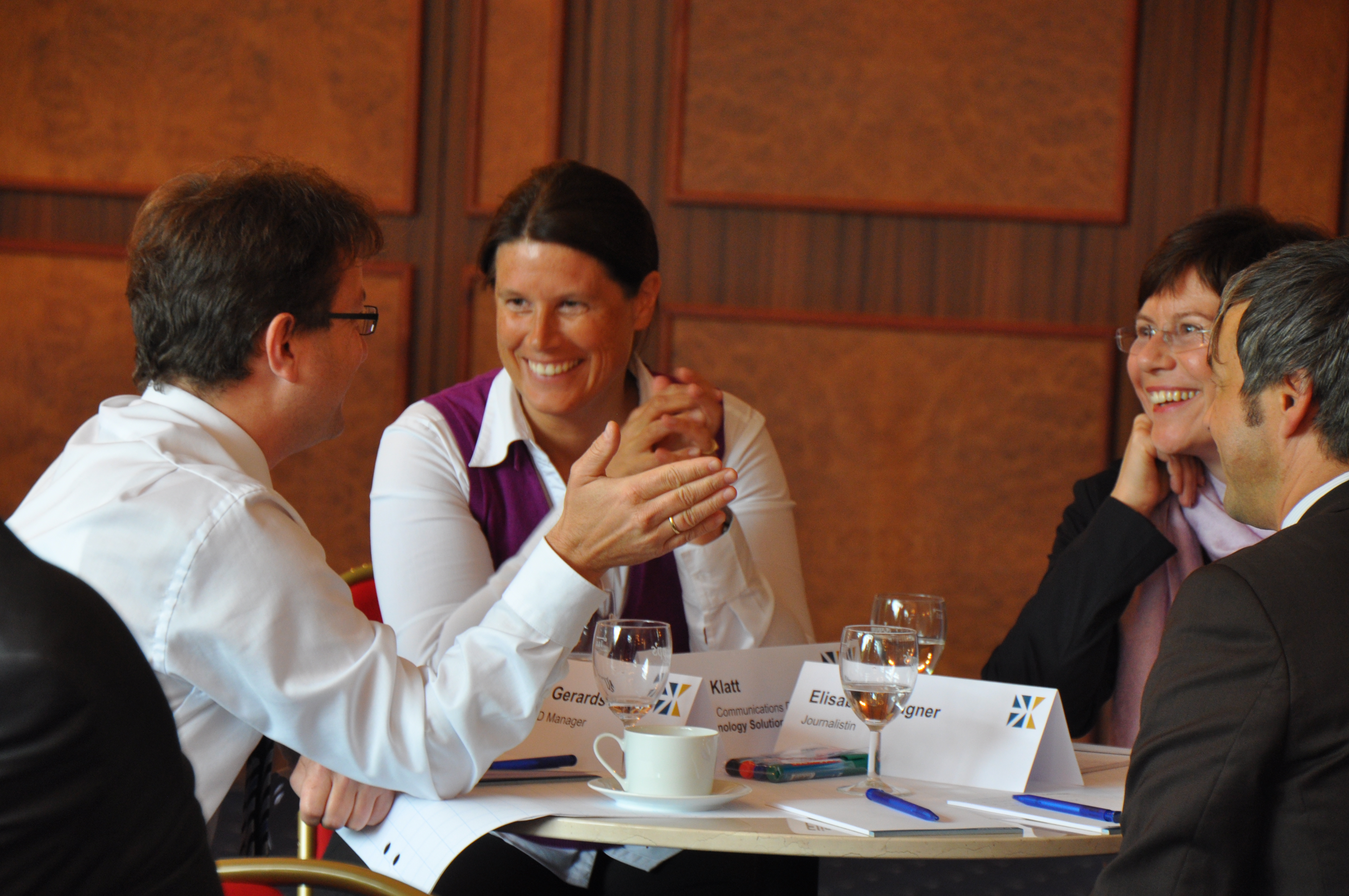
Small rectangular tables are not ideal, but they can still work quite well, as in this Café:
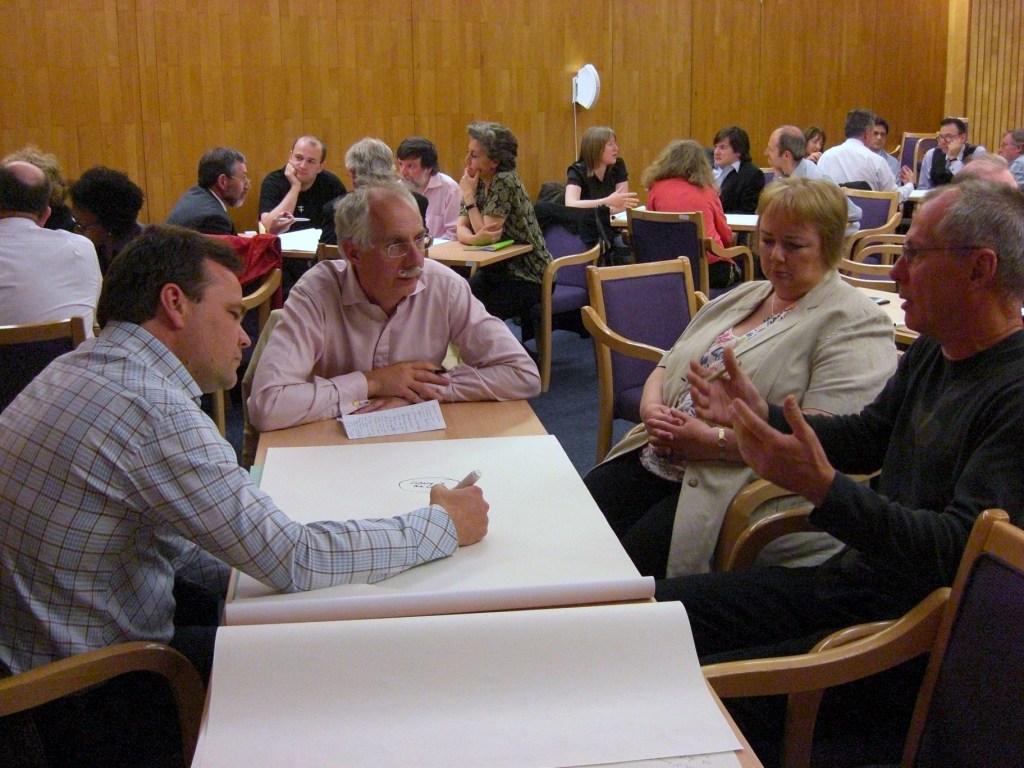
Another good option is to use tall, pod-like tables where people stand. These can create a relaxed and dynamic atmosphere:

Conference tables like the one in the photo below should be avoided. They are too large and seat too many people. Those sitting across from each other are too far apart to engage in a genuine exchange.
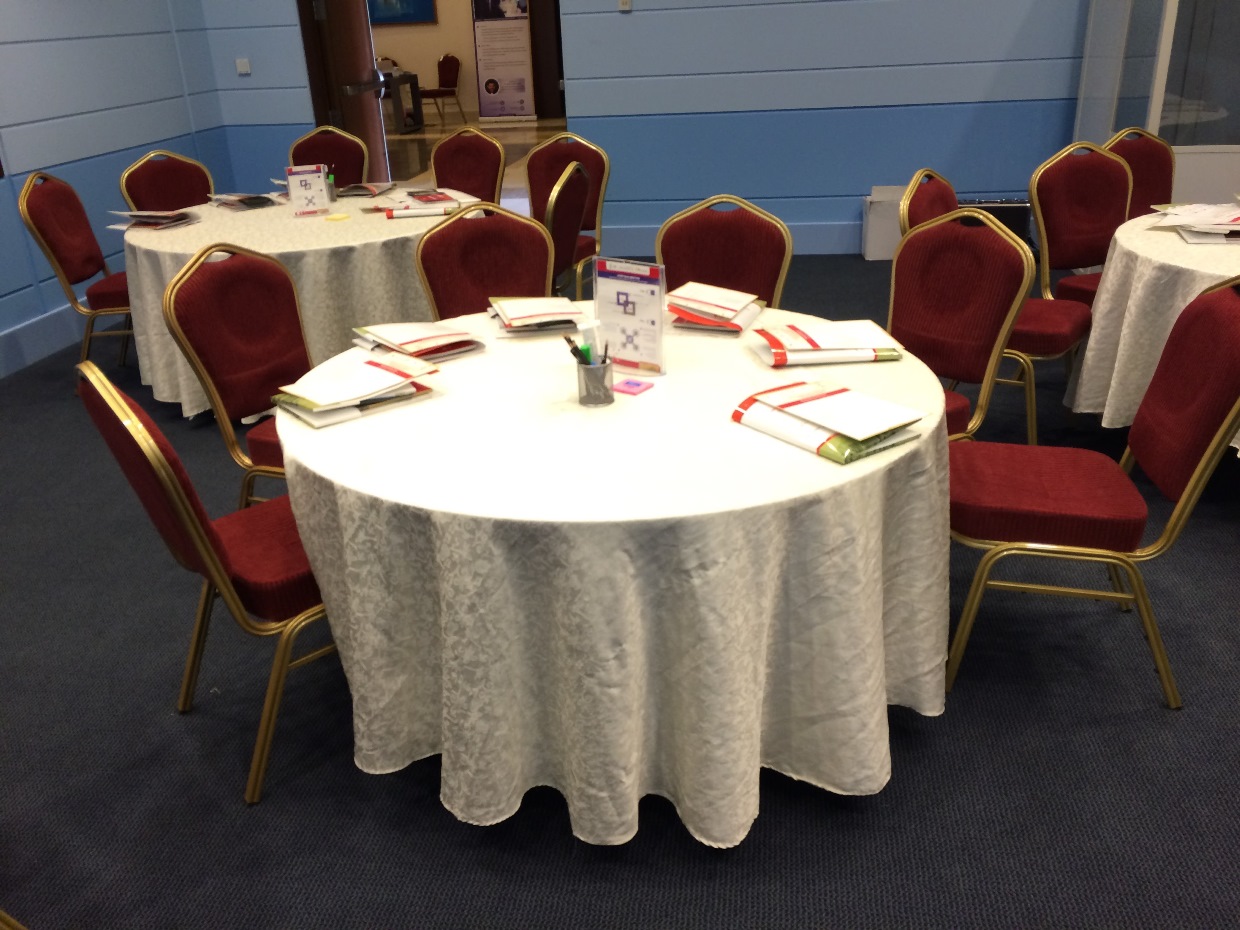
Here is another example of a large conference table—but look carefully:

It can be broken down into four smaller tables—each an ideal size for a Café:

If small tables are not available, it is often better to remove the tables altogether, as shown in this photo. Sitting in a close circle without tables can encourage even more open and engaging conversations.
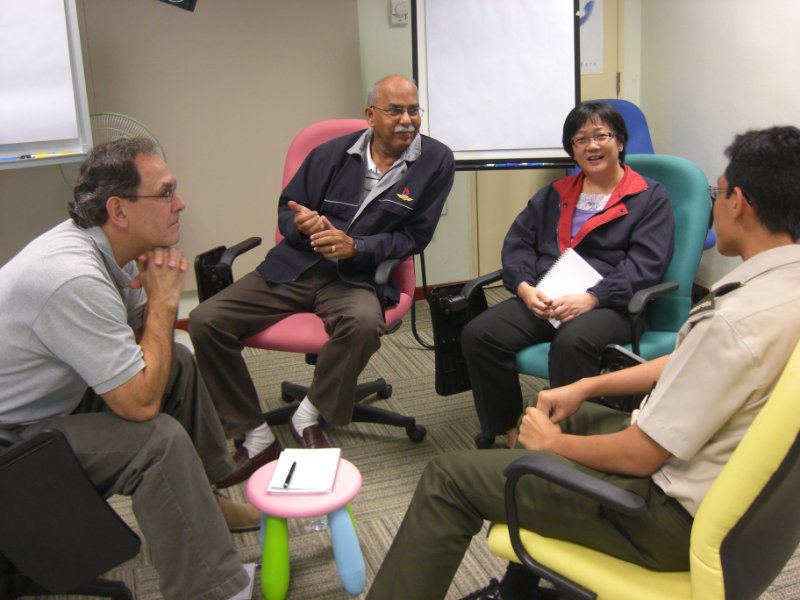
When we arrange our space with care, we make good conversation possible. We can choose small tables, move closer, or even remove the tables altogether. What matters is that we create settings where we can see each other clearly and speak with ease, curiosity, and genuine attention.
Posts that link to this post
- Knowledge Café: Cafés with No Tables Small tables are better than no tables
POST NAVIGATION
CHAPTER NAVIGATION
SEARCH
Blook SearchGoogle Web Search
Leadership as a practice of convening necessary conversations—ones that often go unsaid. Coaching that supports clarity, presence, and more thoughtful ways of working together.