
Conversations always carry assumptions about what can be shared and how. When those assumptions differ, trust breaks down and good thinking disappears. Naming a simple rule at the start can change how safe, open, and useful a conversation becomes. Continue reading Three Disclosure Rules for Conversations Sunshine, Chatham House, and Vegas

Faith is often treated today as belief without proof, which narrows its meaning. The older sense pointed to trust, relationship, and commitment. Recovering that meaning offers a more grounded way to think about faith, one rooted in how we relate to one another rather than in claims we cannot verify. Continue reading The Etymology of Faith From belief without proof to lived connection

Comparison of Large Language Models and Human Intelligence Area Large Language Models Humans Embodiment No body or sensory access, entirely text based Fully embodied with continuous sensory engagement Experience No lived events or personal history Rich subjective experience shaped by relationships, culture, and memory Understanding Works with statistical patterns in language, no grounded meaning … Continue reading LLMS Tables: Intelligence and Conversation ###

Life presents us with situations such as traffic jams, illnesses, or setbacks that simply exist. The human mind turns these conditions into problems by resisting them, layering judgment and expectation upon them. By noticing this shift, we can respond more directly to reality instead of being trapped in the stories we create about it. Continue reading Problems Only Exist in the Mind Anthony de Mello and the nature of awareness

Shared meaning is often assumed rather than examined. Words are treated as if they carry the same meaning for everyone, even though experience, context, and power shape how meaning is made. Shared meaning emerges through real conversation, sustained attention, and the ability to act together despite difference. Continue reading Shared Meaning To understand each other’s perspectives well enough to accept them

Some lies are not meant to deceive but to control. They demand silence, not belief, and punish those who push back. Naming these as bully lies is the first step toward protecting truth, staying grounded, and creating space for honest conversation, even when the pressure is to conform. Continue reading The Bully Lie How obvious falsehoods are used to assert control
Google Web Search This page is part of a blook on Conversational Leadership. Parts of this book have restricted access. You can learn more about the book and how to obtain full access on the home page. Online Knowledge Café: Conversational Leadership — Beyond Knowledge Management Wednesday 17th March 2026, 14:00 – 15:30 London time Knowledge Continue reading Reid Hoffman Meets His AI Twin

We often make quick judgments without noticing the steps behind them. The Ladder of Inference shows how we move from observation to action, shaping our beliefs and actions. Rethinking this process in a complex world can help us respond with greater care and awareness. Continue reading Rethinking the Ladder of Inference in a Complex World From inference to influence

Two voices from different times point to the same truth: trying to control others rarely works, while leading by example creates the space where real change begins. Continue reading Let Them Be, Let Them See Leading by example in a conversational age

Many people hold back their ideas or stay quiet in groups. That silence weakens conversations and leaves potential unheard. Speaking with care and showing up with honesty helps everyone see more clearly. Continue reading Don’t Hide Your Light Under a Bushel ** Why speaking up matters in conversation and leadership

Our political views resist neat categorization. Rigid ideological thinking reduces complexity and limits understanding. Embracing nuance and engaging thoughtfully with diverse perspectives enables more authentic political engagement. Continue reading The Complex Nature of Political Identity Beyond left and right

Sam Harris describes conversation as the only real alternative to violence. But today, meaningful dialogue is rare, especially across difference. Conversational Leadership offers a way to rebuild that possibility through everyday practices of listening, questioning, and staying present. Continue reading Sam Harris’s “Great Problem” and Conversational Leadership The vital connection

We’re often told curiosity helps us learn more, lead better, or think creatively. But when treated only as a tool, its deeper meaning gets lost. What if curiosity isn’t just useful—but a way of caring, connecting, and being more fully present in the world? Continue reading The Care in Curiosity ** Seeing it not as a tool, but a way of being with the world

Curiosity didn’t begin as a quest for knowledge but as an act of care. Over time, we’ve separated inquiry from emotion, treating curiosity as a mental exercise. But its origins reveal a deeper truth: to be curious is to care enough to pay attention. Continue reading The Surprising Etymology of Curiosity A history rooted in care

Leadership is often seen as providing guidance and security. However, authentic leadership may lie in confronting people with their own freedom, even when they resist it. Understanding this tension can help us rethink power, responsibility, and the choices we make in politics, religion, and the age of AI. Continue reading Peter Block, the Grand Inquisitor, and Leadership Leadership, freedom, and the burden of responsibility

Peter Block, the Grand Inquisitor, and Leadership Conversation Is Action Close Pop-up all posts in this chapter What’s the Vibe? Please be patient as this may take up to a minute to load… Close Societies often assume that virtue leads to prosperity, but history suggests a more complex reality. Efforts to eliminate self-interest can unintentionally Continue reading The Fable of the Bees Or, Private Vices, Public Benefits
Many workplaces focus on visible results and overlook the quieter work that shapes how we think. Conversation is often dismissed because poor meetings give it a bad name. Clear and intentional dialogue creates the conditions for real action and makes change easier to achieve. Continue reading Conversation Is Action Transforming talk into tangible outcomes
Conversation Is Action Writing with AI Isn’t Necessarily Cheating Close Pop-up all posts in this chapter What’s the Vibe? Please be patient as this may take up to a minute to load… Close Only Me Continue reading Critical Thinking How to challenge your own assumptions

AI tools are becoming common in writing, raising questions about their role and ethics. Many worry that using AI might undermine creativity or authenticity. In reality, AI can enhance clarity, improve efficiency, and help us focus on crafting ideas that resonate, making it a practical tool for professional and creative work. Continue reading Writing with AI Isn’t Necessarily Cheating Why it’s a legitimate tool for professionals and creators

Conversations shape how we understand and adapt to change. When dialogue is restricted by rigid goals or constrained by fixed plans and schedules, creativity, and insight are often lost. By embracing a flexible, direction-focused approach and allowing the process to unfold naturally, conversations can become dynamic and responsive, leading to richer insights and more innovative outcomes. Continue reading The Vector of Great Conversations A parallel between the vector theory of change and conversational leadership

Effective knowledge sharing is crucial for innovation and success in today’s world. However, many organizations struggle to nurture a culture of collaboration. Implementing Knowledge Cafés offers a practical pathway to enhance knowledge sharing and cultivate a collaborative environment. Continue reading Nurturing a Collaborative Culture Through Knowledge Cafés Using Knowledge Cafés to bridge silos and encourage open dialogue
Nurturing a Collaborative Culture Through Knowledge Cafés Crafting Writing That Drives Change Close Pop-up all posts in this chapter What’s the Vibe? Please be patient as this may take up to a minute to load… Close Continue reading Diplomacy ##
Conventional writing wisdom is often misguided. Larry McEnerney, the retired director of the University of Chicago’s Writing Program, challenges outdated conceptions of good writing that can stifle bloggers and academic writers alike. His unconventional insights provide the key to engaging readers, making a compelling case, and achieving real impact through the written word. Continue reading Crafting Writing That Drives Change Larry McEnerney’s insights on good writing

Many factors, including conversational skills and habits, shape our ability to practice Conversational Leadership effectively. However, the most impactful factor is our mindset. Continue reading Conversational Leadership Mindset Developing a Conversational Leadership mindset

The digital age has given us more free time and tools for collaboration than ever before. Yet much of this potential remains untapped, with online activity often focused on entertainment rather than collective action. Redirecting this surplus energy toward meaningful projects could unlock new possibilities for creativity, knowledge, and social impact. Continue reading Cognitive Surplus Untapping our human potential
Cognitive Surplus Multipolar Traps or Moloch Traps Close Pop-up all posts in this chapter What’s the Vibe? Please be patient as this may take up to a minute to load… Close In the timeline of history, we benefit from the hard work, innovation, and progress made by many generations before us. Our ancestor’s choices have Continue reading Pay It Forward ** Now and for future generatios

In a complex world facing many challenges, multipolar traps emerge when self-interests conflict with collective well-being, leading to detrimental outcomes. To break free, we need to prioritize collaboration, long-term thinking, and shared goals, working across sectors and nations. Continue reading Multipolar Traps or Moloch Traps Acting against our collective interests

Colonialism has historically referred to the domination and control of one group or nation over another. However, the language of colonialism has recently been used to describe other forms of control and dominance. Continue reading Avoiding Modern-day Colonialism Colonialism: the dominance, control, and exploitation by one group over another

Conversations shape how we connect, collaborate, and solve problems. Groups often struggle to focus on the right issues, approach discussions constructively, or build a sense of community. Asking thoughtful questions can guide meaningful dialogue, ensuring conversations address vital needs, encourage participation, and strengthen relationships. Continue reading Three Questions for Meaningful Conversations Clarify focus, approach, and community-building in discussions

Cognitive biases affect how we interpret and respond to conversation and reason together, potentially leading to flawed or irrational conclusions, but there are ways to mitigate their impact. Continue reading The Impact of Cognitive Biases in Conversation Cognitive biases can lead to flawed or irrational conclusions in a conversation

The Impact of Cognitive Biases in Conversation Spirituality Close Pop-up all posts in this chapter What’s the Vibe? Please be patient as this may take up to a minute to load… Close Edgar and Peter Schein’s four levels of relationship: Level Minus 1: Total impersonal domination and coercion. Level 1: Transactional role and rule-based supervision, Continue reading Relationships ** The way in which two or more people are connected

Spirituality often lacks a clear, universally accepted definition, leading to confusion and misconceptions. Many associate it with religion, but spirituality can also exist outside religious frameworks. By considering secular definitions, we can gain a broader understanding of spirituality that emphasizes personal growth, inner peace, and a deep connection to life and the universe. Continue reading Spirituality A deep appreciation, respect, and love for the universe, the world, all life, and humanity
Introduction In an increasingly complex and interconnected world, the concept of binary bias, also known as binary thinking or black-and-white thinking, has gained significant relevance and importance. This cognitive bias reflects our innate tendency to simplify intricate issues, situations, or concepts by viewing them through an oversimplified lens, often inadvertently causing harm to society. … Continue reading The Perils of Binary Bias ** Simplifying complex issues into two extreme and opposing categories

Life presents numerous challenges and opportunities. It is crucial to identify areas under our control versus those beyond our influence. The “Circles of Engagement” model guides us in directing efforts where they can create meaningful change. Continue reading Circles of Engagement ** Aligning efforts with impact

The term “signal-to-noise ratio” is a useful metaphor when discussing the pollution of the information ecosystem with misinformation, disinformation, or situations where much of the information available is irrelevant. Continue reading Signal-to-noise Ratio The ratio of useful or true information to false or irrelevant data

I write about nurturing a better world in this blook, but better is a value-laden word. Better for whom? Even Adolf Hitler thought he was making a better world. So, what do I mean by a better world? Continue reading What Would Make a Better World? Many things
What Would Make a Better World? Personal Power ** Close Pop-up all posts in this chapter What’s the Vibe? Please be patient as this may take up to a minute to load… Close Predicting the future is a fool’s errand, but we can help create it. We live in a complex socio-technical system — a Continue reading Predicting the Future Is a Fools’ Errand ** But we can help create it
Predicting the Future Is a Fools’ Errand ** Global Consciousness Close Pop-up all posts in this chapter What’s the Vibe? Please be patient as this may take up to a minute to load… Close We hold more potential today than ever to transform the world. Since the turn of the millennium, we have gained unprecedented Continue reading Personal Power ** We hold more potential today than ever to transform the world

What is global consciousness? Before answering that question, we need to look at the terms consciousness, collective consciousness, and higher consciousness as they are poorly understood. Continue reading Global Consciousness The capacity and disposition to understand and act upon global issues

Curiosity fuels human progress. Today’s complex world can dampen our natural inquisitiveness. Encouraging questions help us understand change, find new ideas, and keep learning. Continue reading The Power of Curiosity Driving human progress

Conversational Leadership is a relatively young, rapidly evolving discipline. Although much has been written about the power of conversation over the years, I am interested here in published material that refers specifically to the term Conversational Leadership or closely related concepts. Continue reading The History of Conversational Leadership 1985 to today
We often see those with different beliefs as adversaries, which limits our ability to recognize the potential for friendship and understanding. Conversational Leadership encourages open dialogue across diverse perspectives, helping us build empathy and shared insights to navigate our complex world together. Continue reading We Are Not Enemies but Friends Finding understanding by conversing with those who think differently
In life, we can choose to take responsibility in several ways. Most critically, we can choose to take ownership of the changes we wish to see in the world. Continue reading Responsibility We need to take responsibility for the changes we wish to see in the world
Responsibility Zoom Virtual Knowledge Cafés ** Close Pop-up all posts in this chapter What’s the Vibe? Please be patient as this may take up to a minute to load… Close Resources Forbes: Consensus – Team Building’s Silent Killer Blog Post: The trouble with the consensus model Dave Snowden: On navigating conflict [Status: stub] POST NAVIGATION Continue reading Consensus ** The trouble with consenus
Consensus ** Changing People ** Close Pop-up all posts in this chapter What’s the Vibe? Please be patient as this may take up to a minute to load… Close The Knowledge Café A Knowledge Café gathers 12 to 30 people together to have a conversation. It typically consists of a short presentation on a topic Continue reading Zoom Virtual Knowledge Cafés **

Change is a constant aspect of our lives, gradually shaping our identities. However, we face difficulties when attempting to change others’ behaviors. Direct attempts to control or coerce usually result in resistance and unintended consequences. Embracing a conversational approach can help us navigate change more effectively, fostering mutual understanding and collaboration. Continue reading Changing People ** The challenge of trying to change people

We are familiar with the concept of cause and effect, and in most situations, it is apparent which is the cause and which is the effect, to the extent that we rarely stop to consider the reverse. Continue reading Reversing Cause and Effect The conversation creates the speakers

When considering knowledge sharing or creating a more collaborative culture, we often talk about the need for people to be open and transparent. These two concepts are usually used interchangeably and often without too much thought as to what they mean. To be effective as knowledge workers, we need to network, share more, work more collaboratively, and work in a way that facilitates continuous … Continue reading Be Open and Transparent ** Key traits of knowledge workers

Be Open and Transparent ** When It Comes to Lectures, Appearances Can Be Deceiving ** Close Pop-up all posts in this chapter What’s the Vibe? Please be patient as this may take up to a minute to load… Close Learning is not about teaching or training. Personally I’m always ready to learn, although I do Continue reading Learning **
Learning ** The Mind Is a Fire to Be Kindled Close Pop-up all posts in this chapter What’s the Vibe? Please be patient as this may take up to a minute to load… Close Imagine you receive the same lecture twice: once from a charismatic lecturer speaking fluently without notes and maintaining eye contact; and Continue reading When It Comes to Lectures, Appearances Can Be Deceiving ** Eric Mazur thought he was a good teacher until he discovered his students were just memorizing information
When It Comes to Lectures, Appearances Can Be Deceiving ** Learn to Listen and to Tell the Truth Close Pop-up all posts in this chapter What’s the Vibe? Please be patient as this may take up to a minute to load… Close Whether it is our educational systems or the presentations we give at conferences, Continue reading The Mind Is a Fire to Be Kindled Not a vessel to be filled

Do we listen, to confirm what we already think or do we listen in order to reply? Or do we listen to discover something new? Do we enter into a conversation with a willingness to learn rather than the intent to persuade others to accept our views? Continue reading Learn to Listen and to Tell the Truth Do we listen, to confirm what we already think or do we listen in order to reply?

Learn to Listen and to Tell the Truth Evidence for a Collective Intelligence Factor in the Performance of Human Groups ** Close Pop-up all posts in this chapter What’s the Vibe? Please be patient as this may take up to a minute to load… Close The complexity of the world is accelerating as we enter Continue reading The Fourth Industrial Revolution A new era of connectedness and complexity
The Fourth Industrial Revolution How to Design Powerful Questions Close Pop-up all posts in this chapter What’s the Vibe? Please be patient as this may take up to a minute to load… Close Evidence for a Collective Intelligence Factor in the Performance of Human Groups By Anita Williams Woolley, Christopher F. Chabris, Alexander Pentland, Nada Continue reading Evidence for a Collective Intelligence Factor in the Performance of Human Groups **

Questions shape our understanding and actions. The right questions spark curiosity, challenge assumptions, and lead to meaningful conversations. Designing powerful questions requires clarity, openness, and relevance. Continue reading How to Design Powerful Questions Questions open the door to dialogue and discovery

Albert Mehrabian never claimed the false assertion that 93% of our communication is nonverbal. Non-verbal signals play a role in communication, but they are not more important than words. Continue reading The Mehrabian Myth It is not true that 93% of our communication is nonverbal

In many communities, persistent problems such as malnutrition or disease often resist top-down solutions. Too often, experts overlook the hidden knowledge already present within the system. Positive Deviance offers a way forward by uncovering uncommon yet successful behaviors already practiced by insiders and building change from within. Continue reading Positive Deviance in Action How everyday outliers spark lasting community change
Positive Deviance in Action Hawthorne Effect Myth Close Pop-up all posts in this chapter What’s the Vibe? Please be patient as this may take up to a minute to load… Close The New Science of Building Great Teams By Alexander Pentland April 2012 Harvard Business Review • Characteristics of successful teams 1. Everyone talks & Continue reading The New Science of Building Great Teams ** 35% of variation in team performance is accounted for by the amount of face-to-face communication

The New Science of Building Great Teams ** Is Noise Always Bad? ** Close Pop-up all posts in this chapter What’s the Vibe? Please be patient as this may take up to a minute to load… Close The research underpinning the Hawthorne effect was flawed, and the story is a myth though being watched does Continue reading Hawthorne Effect Myth Being watched affects your behavior

Hawthorne Effect Myth Conversational Post-project Reviews ** Close Pop-up all posts in this chapter What’s the Vibe? Please be patient as this may take up to a minute to load… Close Whenever I wish to write something creative or reflect on an issue or problem, I have always found that a Café is one of Continue reading Is Noise Always Bad? ** Exploring the Effects of Ambient Noise on Creative Cognition

Is Noise Always Bad? ** Everything Is Fragmented ** Close Pop-up all posts in this chapter What’s the Vibe? Please be patient as this may take up to a minute to load… Close Traditional post-project reviews are often not very useful. The Knowledge Café has the potential to inject some life into them. In project Continue reading Conversational Post-project Reviews **

Conversational Post-project Reviews ** Entrained Thinking Close Pop-up all posts in this chapter What’s the Vibe? Please be patient as this may take up to a minute to load… Close Everything is fragmented. The more you structure material, the more you summarize, the more you make material specific to a context or time, the less Continue reading Everything Is Fragmented ** Fragmentation
Everything Is Fragmented ** Managers Are Employees Too ** Close Pop-up all posts in this chapter What’s the Vibe? Please be patient as this may take up to a minute to load… Close Entrained thinking is a conditioned response that occurs when people are blinded to new ways of thinking by the perspectives they acquired Continue reading Entrained Thinking Blinded to new ways of thinking by perspectives acquired through past experience
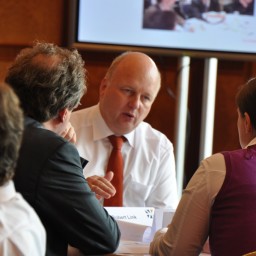
There is a problem when talking about organizational life: our use of language. Managers are called managers, and their so-called subordinates — the people who report to them — are called employees. As an aside, I’m not too fond of the word subordinate. I find the word demeaning as it is usually defined as a person of lower rank or position or under the authority or control of another within an … Continue reading Managers Are Employees Too ** They can be hired, fired and appraised just like everyone else