We don’t have a good word for engaging in a non-hostile disagreement with the shared aim of moving the participants towards a new understanding, better decision or new idea.
- Debate implies a competition with winners and losers.
- Argument comes tinged with animosity.
- Dialogue is too bland.
- Dialectic is too obscure.
We talk about argument as if it is war: we say that her claims are indefensible, that he attacked the weakest point of my thesis, that I demolished his argument, that she shot down my idea .
We see the person we are arguing with as an enemy who must be defeated.
It’s possible though to experience argument, very differently.
Instead of finding it stressful and unpleasant, we can find it stimulating and enjoyable.
Instead of driving us apart, it could draw us together.
Credit: Ian Leslie
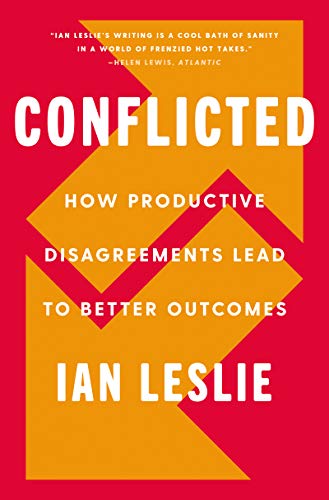 Source: Conflicted (Slightly adapted from page 22 of the book Conflicted (paperback edition) by Ian Leslie)
Quotations: Ian Leslie (1)
Videos: Ian Leslie (1)
Image Credits: Pixabay
 (Pixabay)
Learn to lead by hosting the conversations that rarely happen but deeply matter. Coaching helps you turn dialogue into a daily leadership practice.