

In the Knowledge Café, the essence of the small-group conversations is to get as close as possible to a natural conversation, such as one in a coffee shop.
In a Café, no one is in control of the conversation, no one typically takes notes, and, to the greatest extent possible, everyone is equal. The conversation naturally flows.
So the key philosophies behind the small group conversations are as follows:
- The groups should be no more than 3 or 4 people (at the most 5) in size (this is an ideal size that is backed up by research
- Everyone has an equal voice
- The quieter people should feel comfortable enough to open up
- The more dominating speakers should be sufficiently aware of their style to tone things down a little
- Anything that gets in the way of the natural flow of the conversation should be eliminated or minimized
This translates into practice like this:
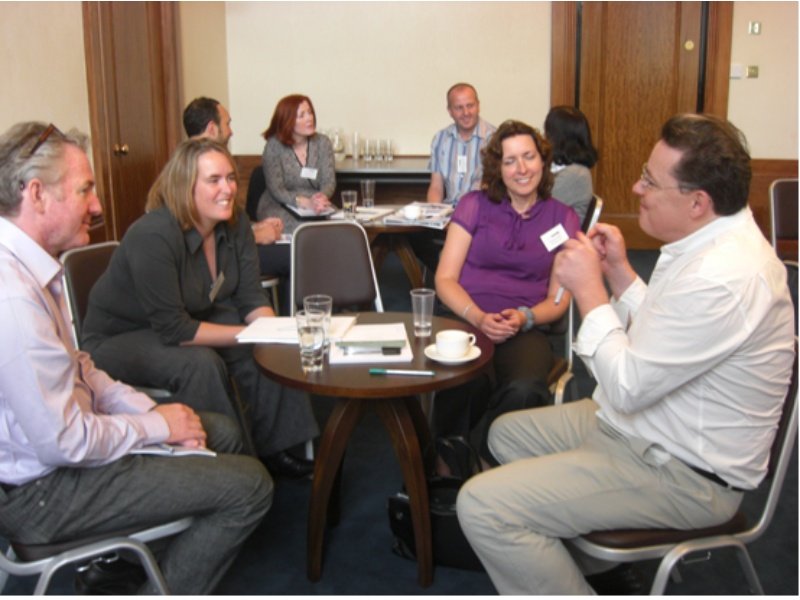
- There are no table leaders or hosts, and no one is asked to do anything different from anyone else
- No flip charts
- No paper and pens on the tables
- It is made clear that there will be no reporting back. In other words, no one will be put on the spot and called on to report back on behalf of their table
- A group note taker is only assigned where necessary
- Individuals may take notes, but should be encouraged either not to do so or to keep note-taking to a minimum
Small-group conversations are at the heart of a Knowledge Café, and everything should be done to ensure participants’ psychological safety and to ensure the conversation flows freely.
Posts that link to this post
- Conversational Talks How to give a conversational talk or presentation
- Gurteen Knowledge Café: Entrenched and Entrained Thinking A blog post by Conrad Taylor
- Knowledge Café in Zurich, Switzerland The Knowledge Café has empowered our staff to speak up and take the initiative
- Knowledge Café: Cafés with No Tables Small tables are better than no tables
- Knowledge Café: Going Off-topic It is OK to off-topic
Join one of my upcoming Knowledge Cafés or workshops and explore Conversational Leadership in practice.
Engage in thoughtful conversation, challenge assumptions, and connect with others working in knowledge, leadership, and organisational change.
This looks like a typo to me:
it is made clear that there will be reporting back. In other words, no one will be put on the spot and called on to report back on behalf of their table
“reporting back” should read “no reporting back”. Am I right?
—-
Also something about the small group format reminds me of Tavistock group relations learning groups. Also Social Dreaming work.
That’s right, Bill. I have made the correction. I’ll also take a look at Tavistock group relations learning groups and Social Dreaming work as I am not familiar with either of them. Thanks, David