
In this book, Curious, Ian Leslie makes a passionate case for the cultivation of our “desire to know.” Drawing on fascinating research from psychology, economics, education, and business, Ian looks at what feeds curiosity and what starves it and finds surprising answers. Curiosity is a mental muscle that atrophies without regular exercise and a habit Continue reading Curious: the Desire to Know and Why Your Future Depends on It by Ian Leslie (2014)

Register to receive the Gurteen Knowledge Letter by email each month Browse Previous Knowledge Letters Gurteen Knowledge Letter Issue 303 – September 2025 I’ve recently opened a Substack account, and I’m really enjoying it. It’s almost replacing my RSS feed reader because there’s so much engaging material being shared there. One Substack I especially recommend Continue reading Gurteen Knowledge Letter September 2025 Issue 303

video player Why do we believe things that aren’t true? | Philip Fernbach Transcript One Transcript starting at 2:10 to 3:38. (I’ve highlighted some of the text to draw attention to the more pertinent points.) As human beings, false belief is our birthright. It stems from fundamental principles that govern the way our minds work Continue reading Why Do We Believe Things That Aren’t True? Philip Fernbach (2017)

To really work conversationally, I think, is potentially to be really open to the complexity of what being human is like. | Johnnie Moore Continue reading To Really Work Conversationally Johnnie Moore, 2023
Register to receive the Gurteen Knowledge Letter by email each month Browse Previous Knowledge Letters Gurteen Knowledge Letter Issue 301 – July 2025 If you know me or have been receiving this Knowledge Letter for a while (and many of you have since it’s been going for over 25 years), you’ll probably be familiar with Continue reading Gurteen Knowledge Letter July 2025 Issue 301
Please stop saying you researched it. You didn’t research anything and it is highly probable you don’t know how to do so. Did you compile a literature review and write abstracts on each article? Or better yet, did you collect a random sample of sources and perform independent probability statistics on the reported results? No? Continue reading Please Stop Saying You Researched It Linda Gamble Spadaro
Register to receive the Gurteen Knowledge Letter by email each month Browse Previous Knowledge Letters Gurteen Knowledge Letter Issue 281 – November 2023 Recently, I hosted two Intergenerational Knowledge Cafés with Hank Kune, Charles Fowler, and Minal Kering as part of World Values Day. These events united elders (aged 60 and above) and students (aged Continue reading Gurteen Knowledge Letter November 2023 Issue 281
Register to receive the Gurteen Knowledge Letter by email each month Browse Previous Knowledge Letters Gurteen Knowledge Letter Issue 274 – April 2023 I organized my first Knowledge Café in London in September 2002 and have regularly hosted them there and in other countries worldwide for over 20 years. Recently, with the advent of technologies Continue reading Gurteen Knowledge Letter April 2023 Issue 274

John Hagel is a management consultant and author who specializes in helping executives to anticipate and address emerging business opportunities and challenges. He is the founder and co-chairman of Deloitte‘s Center for the Edge. I don’t know John but I love his work, especially his blog posts (see this post on spirit set), not only Continue reading John Hagel Management Consultant & Author

This paper discusses research into the knowledge café technique conducted over the last 10 years. It also summarises knowledge sharing techniques similar to knowledge cafés and assesses some of the advantages and disadvantages of these techniques. Abstract This paper discusses research into the knowledge café technique conducted over the last 10 years. The paper summarises knowledge sharing techniques Continue reading Why Knowledge Cafés Can Be Valuable to Organisations Peter Sharp (2019)
Executive Summary Overview This report provides an evaluation of Climate Assembly UK (CAUK). This was a citizens’ assembly commissioned by six select committees from the House of Commons: Business Energy and Industrial Strategy (BEIS); Environmental Audit; Housing, Communities and Local Government, Science and Technology; Transport; and Treasury. It was tasked with providing recommendations on how Continue reading Evaluation of Climate Assembly UK Stephen Elstub, David M. Farrell, Jayne Carrick and Patricia Mockler (2021)
Don’t ask kids what they want to be when they grow up but what problems do they want to solve. This changes the conversation from who do I want to work for, to what do I need to learn to be able to do that. | Jaime Casap Continue reading Don’t Ask Kids What They Want to Be When They Grow Up Jaime Casap
Chris Corrigan is a facilitator of participatory practices such as Open Space Technology and the World Café. He specializes in large group facilitation process and participatory approaches to change, complexity and systemic innovation. I have followed Chris’s work via his blog and Twitter feed for several years and am impressed with his ability to explain Continue reading Chris Corrigan Participatory practices facilitator

This is an external resource such as an article, blog. Below is a summary of the key points from the resource, along with a link to the complete article. The full article can be accessed via the link if you would like to read the content in its entirety. Harvard Business Review: The Neurochemistry of Continue reading The Neurochemistry of Positive Conversations Judith E. Glaser and Richard D. Glaser (2014)
Register to receive the Gurteen Knowledge Letter by email each month Browse Previous Knowledge Letters Gurteen Knowledge Letter Issue 251 – May 2021 Introduction My next Knowledge Café workshop is coming up fast in just over 1 week on 20th May. You can find more information and register for it here. I had some great Continue reading Gurteen Knowledge Letter May 2021 Issue 251
Register to receive the Gurteen Knowledge Letter by email each month Browse Previous Knowledge Letters Gurteen Knowledge Letter Issue 249 – March 2021 Introduction This is the fourth issue of my Knowledge Letter in its new format and location. I hope you are enjoying it and the close integration with my blook on Conversational Leadership. Continue reading Gurteen Knowledge Letter March 2021 Issue 249
Register to receive the Gurteen Knowledge Letter by email each month Browse Previous Knowledge Letters Gurteen Knowledge Letter Issue 250 – April 2021 Introduction The third annual workshop on Conversational Leadership is coming up in two weeks on April 26 – 30. This is your last chance to register. It’s an interactive, conversational event with Continue reading Gurteen Knowledge Letter April 2021 Issue 250

Effective Knowledge Management is crucial in today’s complex world, however, the distinction between terms like data, information, knowledge, explicit, tacit, and implicit knowledge can often be confusing. It is important to have a clear understanding of the differences. Continue reading Data, Information and Knowledge What’s the difference?
Tacit knowledge is a type of knowledge that is difficult to express or communicate through words. It is a vital component of human expertise and plays a crucial role in enabling us to adapt to new situations, solve complex problems, and drive innovation and progress. Continue reading The Importance of Tacit Knowledge Tacit knowledge is knowledge that is difficult to transfer
The DIKW pyramid is widely used to explain how data, information, knowledge, and wisdom relate. The model looks clear, but it oversimplifies how knowing actually develops in practice. A better understanding comes from recognising the roles of context, conversation, judgement, and human sense-making. Continue reading The DIKW (data, Information, Knowledge, Wisdom) Pyramid Why the DIKW model falls short

Systems are integral to various aspects of life, from nature to technology. Understanding systems can be challenging due to their complexity and interdependence. By examining their components and relationships, we can gain insights and develop solutions for effectively managing and improving these interconnected processes. Continue reading What Is a System? ** An interconnected set of elements organized in a way that achieves something

The summit brought people together to explore fresh ideas through open conversation. Formal sessions often leave little room for reflection or shared sense-making. The Knowledge Café offered a simple structure that allowed people to slow down, think together, and uncover insights shaped by real dialogue. Continue reading Knowledge Cafés at the Knowledege Summit Dubai 2025

We use the word meaning all the time, often assuming it is clear and stable. The problem is that meaning is usually treated as something contained in words rather than something that arises in use and relationship. A relational view shifts attention from definitions to interaction, context, and what meaning makes possible. Continue reading Rethinking Meaning How meaning arises through use and relationship

As part of my research into different ways of understanding information, I had a conversation with ChatGPT to test and refine my thinking. Afterwards, I realised I had the full text of the exchange, so I decided to experiment and create an AI-generated audio version. Continue reading A Conversation with ChatGPT Exploring Information An experiment in creating an AI generated audio conversation

In a time obsessed with influence, Hannah Arendt chose restraint. She saw how the desire to lead others could quietly become a form of control. Instead of guiding minds, she defended the conditions in which people could think for themselves. This redefines how we understand leadership, responsibility, and the role of conversation. Continue reading Hannah Arendt and the Risk of Influence How leadership begins by thinking together, not persuading

Business language often assumes the world is stable, measurable, and controllable. In complex contexts, words like maximize, minimize, and optimize quietly overclaim what can be known or achieved. A more honest approach treats decisions as hypotheses, focuses on direction rather than endpoints, and keeps learning open as situations change. Continue reading The Trouble with Optimization in a Complex World What maximizing and minimizing get wrong in complex contexts

Most change initiatives begin with trying to change individuals, but lasting change rarely starts there. Interaction, not the individual, is the primary unit of change. Continue reading Interaction as the Primary Unit of Change Is not the individual, it’s the interaction
This blook is not just about me. Numerous people, some living, some not, have understood the power of conversation, appreciated the complexity of the world, and have influenced my thinking. You will find the profiles of a few of these people here. The list below is a subset of these people, whose prime focus is Continue reading Conversation Thinkers It’s the fringe thinkers who change the world
This blook is not just about me. Numerous people, some living, some not, have understood the power of conversation, appreciated the complexity of the world, and have influenced my thinking. You will find the profiles of a few of these people here. The list below is a subset of these people, whose prime focus is Continue reading Complexity Thinkers It’s the fringe thinkers who change the world

Nurturing an innovative culture goes beyond traditional management and control methods. Many initiatives fail by trying to enforce change through rigid directives, which can backfire. Instead, culture should be seen as emergent, evolving naturally through interactions, flexibility, and supportive environments where creativity can thrive. Continue reading Nurturing an Innovation Culture Allowing emergence, not imposing change

What Is the Difference Between Rhetoric and Oracy? What Is a Real Conversation? Close Pop-up all posts in this chapter What’s the Vibe? Please be patient as this may take up to a minute to load… Close Conversation is a form of interactive, spontaneous communication between two or more people. Typically it occurs in spoken Continue reading Introduction: the Power of Conversation A powerful, adaptable human technology

Collective Sense-making The Power of Peer Instruction Close Pop-up all posts in this chapter What’s the Vibe? Please be patient as this may take up to a minute to load… Close Conversational learning is a form of learning that takes place through meaningful conversations and interactions between individuals. It emphasizes the importance of dialogue, exchange Continue reading Introduction: Conversational Learning Unleashing knowledge
This blook is not just about me. Numerous people, some living, some not, have understood the power of conversation, appreciated the world’s complexity, and have influenced my thinking. You will find the profiles of a few of them listed below. Each profile says (or will say when complete) a few words about the person, how Continue reading People on Conversational Leadership It’s the fringe thinkers who change the world
In complex environments, nothing stands still. Time passes, conditions shift, and action alters what follows. Treating decisions as final closes conversation and hides doubt. Treating decisions as hypotheses keeps learning alive and allows adjustment as the world continues to change. Continue reading A Decision Is Never Final in a Complex World Why decisions work better as hypotheses than conclusions

Amid World War II, the U.S. urgently needed advancements in radar technology. MIT lacked adequate space, so the hastily built Building 20 became home to wartime research. This makeshift structure’s flexibility and interdisciplinary environment fostered groundbreaking collaboration, demonstrating that innovation flourishes when diverse minds and ideas interact freely. Continue reading Building 20 at MIT Innovation Story: A humble wartime lab that sparked a legacy of innovation and collaboration
Distinguishing between complex systems and complex adaptive systems is essential. The challenge is that these terms are often used interchangeably. By understanding the key differences, we can better analyze and predict system behaviors in diverse domains. Continue reading Complex Systems and Complex Adaptive Systems ** Complexity

Innovation thrives where diverse ideas meet. Yet, many organizations struggle to create environments where collaboration leads to real breakthroughs. Pixar’s journey shows how openness, meaningful dialogue, and creative risk-taking can turn challenges into opportunities, blending technology and storytelling to transform an entire industry. Continue reading The Pixar Way Innovation Story: Lessons from Pixar on blending ideas, technology, and storytelling

Urban transportation has long struggled with inefficiencies, from unreliable taxis to limited convenience. These challenges called for innovative solutions to make getting around easier. Uber answered with a groundbreaking platform, using GPS and smartphone technology to transform how people navigate their cities. Continue reading The Birth of Uber Innovation Story: How everyday frustrations and collaboration shaped Uber’s global transformation

Traditional change management methods, with their rigid plans and fixed outcomes, often struggle in today’s complex, unpredictable environments. Dave Snowden’s Vector Theory of Change offers a more adaptable solution by focusing on setting a broad direction (vector) rather than a specific goal. Continue reading The Vector Theory of Change Navigating change in a complex world
Innovation often gets trapped in silos, seen as the domain of specialists or formal initiatives. This leaves everyday insights and small improvements untapped. The Innovation Café flips that script—creating space for anyone, in any role, to identify opportunities and take simple, meaningful steps toward change. Continue reading The Innovation Café Network Sparking everyday innovation

The word strategy can mean different things depending on the context, from simple plans to complex adaptive approaches. This range can lead to misunderstandings about its purpose. Exploring practical examples helps clarify how strategy functions in different situations. Continue reading The Many Faces of Strategy How strategy varies from simple plans to shaping entire environments

Innovation can look like it happens overnight, but typically develops step by step. Change mostly comes from building on what already exists and stretching just beyond our current limits. The theory of the adjacent possible explains how progress happens by gradually expanding into new territory that’s within reach of where we are now. Continue reading Exploring the Adjacent Possible Understanding change as a series of nearby moves
One of the ideas behind this blook is that as I write it, a small group of interested people can comment and give me feedback as it develops. I’d appreciate any feedback that you might have. Please leave it as replies to the individual posts on which you wish to comment or if you prefer you Continue reading Feedback on This Blook Please give me feedback
Complex Adaptive Systems (CAS) Overview Complex Adaptive Systems (CAS) are systems composed of many interacting components or agents that adapt or learn based on their interactions with each other and their environment. These systems exhibit emergent behavior, meaning that the collective behavior of the system is more complex than the sum of the behaviors of its individual parts. Key … Continue reading Complex Adaptive Systems Vs. Complex Responsive Processes ** Complexity

This website is a form of blook. It is a hybrid of a blog, a website, and an online book. I created a “blook” and defined the blook format as I could not find anything that met my needs. Read anytime, anywhere, on any device. I tend to read everything online on my laptop, iPad, Continue reading This Is a Blook A blook is a cross between a blog and a book

Conversations are a familiar part of daily life, yet their complexity often goes unnoticed. Beneath the surface, they function as complex, responsive processes, where participants continuously react and adapt to each other. By recognizing the sophisticated dynamics at play, we can better understand these everyday interactions. Continue reading Conversations Are Complex Responsive Processes Conversations are dynamic, emergent interactions shaping organizational reality
In today’s complex world, the ability to effectively navigate and respond to different situations and contexts is crucial. This is where the concept of dispositional states is particularly important. The world we live in is no longer neatly compartmentalized into simple, obvious contexts. Instead, we are constantly faced with intricate, interconnected systems and situations that exhibit complex … Continue reading Dispositional States ** Complexity
Emergence in a complex system refers to the phenomenon where new patterns, behaviors, or properties arise at the system level that cannot be easily predicted or explained by analyzing the system’s individual components in isolation. In other words, the system’s collective behavior is different from and often more complex than the sum of its parts. Key Features of Emergent Properties 1. … Continue reading Emergence in Complex Systems ** Complexity

Hormones and possibly pheromones greatly influence our social interactions and conversational dynamics. The role of these chemical messengers is often overlooked, leading to miscommunications and strained relationships. Understanding the effects of these chemicals can help improve communication and interpersonal connections. Continue reading Conversational Chemistry The role of chemical messengers in communication

Navigating complex systems requires innovative problem-solving approaches. Traditional linear methods often prove ineffective in unpredictable environments. Safe-to-fail probes offer a valuable tool for gaining insights, building resilience, and driving sustainable change through small-scale experiments. Continue reading Navigating Complexity with Safe-to-fail Probes The power of safe-to-fail probes
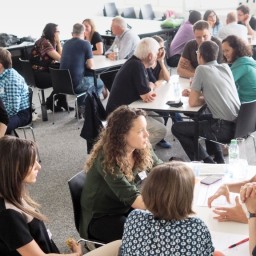
Effective knowledge sharing is crucial for innovation and success in today’s world. However, many organizations struggle to nurture a culture of collaboration. Implementing Knowledge Cafés offers a practical pathway to enhance knowledge sharing and cultivate a collaborative environment. Continue reading Nurturing a Collaborative Culture Through Knowledge Cafés Using Knowledge Cafés to bridge silos and encourage open dialogue
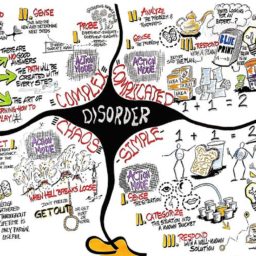
Complex systems defy simplistic problem-solving. Rather than definitive solutions, we can only respond to the intricate web of interconnected elements. In a complex environment, there are no solutions, only an endless series of adaptive responses. Continue reading There Are No Solutions to Complex Challenges Only an endless series of adaptive responses

In an unpredictable world, achieving complex goals through direct methods often fails. Traditional, rigid planning can fall apart under changing circumstances. Embracing obliquity—an indirect, adaptive approach—leads to success by allowing flexibility, learning from failures, and focusing on meaningful pursuits. Continue reading Obliquity in a Complex World In a complex world, goals are often best achieved indirectly

Actor-network theory (ANT) deepens our understanding of complex systems by recognizing the role of non-human entities. However, focusing solely on these can overlook the role of human agency. By incorporating human interpretation and decision-making, ANT offers a richer, more nuanced view of how change unfolds in complex systems. Continue reading The Role of Human Agency Within Actor-network Theory Actor-network theory

Sense-making and meaning-making are often conflated or used interchangeably, but they have distinct meanings. Continue reading Sense-making and Meaning-making The terms have distinct meanings

Conventional writing wisdom is often misguided. Larry McEnerney, the retired director of the University of Chicago’s Writing Program, challenges outdated conceptions of good writing that can stifle bloggers and academic writers alike. His unconventional insights provide the key to engaging readers, making a compelling case, and achieving real impact through the written word. Continue reading Crafting Writing That Drives Change Larry McEnerney’s insights on good writing
We often talk about people, information, and systems as if they exist independently. This hides how meaning, behaviour, and understanding actually arise through connection and context. A relational view shifts attention from isolated things to interactions, patterns, and the conditions from which meaning emerges. Continue reading Relationality Explained Things only make sense in relation

Cognition is a complex process that involves not only our brains but also our bodies, environments, and actions. This is the idea behind 4E cognition, which encompasses the four factors that shape cognition: embodiment, embeddedness, extension, and enaction. It’s common for us to think that all our cognitive processes occur solely in our minds or brains, but this is a limited and potentially … Continue reading Understanding 4E Cognition The multidimensional nature of cognition

It’s easy to move from one activity to the next without pausing to reflect. This absence of reflection often results in repeated mistakes and missed opportunities for improvement. Regularly using After-Action Reviews allows teams to learn from their experiences and enhance performance. Continue reading After-action Reviews and the Habit of Thoughtful Leadership Conversations Nurturing a conversational culture

Evaluate Sources and Evidence Explore What’s Missing Close Pop-up all posts in this chapter What’s the Vibe? Please be patient as this may take up to a minute to load… Close Explore Other Perspectives: Ask the chatbot to provide alternative perspectives on a subject. This method encourages us to consider different viewpoints, developing a more Continue reading Explore Other Perspectives Use the chatbot to broaden your understanding of a subject

AI language models are transforming creative expression, echoing postproduction art’s remixing practices. Traditional notions of original authorship face challenges in this new landscape. AI enables creators to curate, remix, and collaborate with existing cultural materials in novel ways. Continue reading The Postproduction Paradigm – AI and the Art of Remixing LLMs as catalysts for a remix revolution

Traditional writing emphasizes planning and clarity. This can stifle the raw, uncertain beginnings of creative thought. Vibe writing encourages starting without a plan, trusting rhythm and mood instead. Continue reading Vibe Writing Explained Writing that starts with emotion, not structure

Large language models are changing how people write software. However, not all AI-assisted coding works the same way. Vibe coding offers a looser, more conversational approach—less about writing every line yourself, more about shaping what the AI gives you until it feels right. It’s a different kind of programming. Continue reading What Is Vibe Coding? Programming in the Age of AI

We’ve long treated productivity as a race to do more in less time. However, when creativity relies on research, writing, and clarity, good ideas often stall before they take off. Language models like ChatGPT help us transition from thought to action more quickly, transforming how we think, work, and create. Continue reading Rethinking Productivity with LLMs How LLMs help us move from idea to impact

Traditional lectures often fail to engage students in real understanding. People need more than just information—they need to make sense of it through discussion. Peer Instruction helps by encouraging learners to explain ideas to each other, leading to deeper learning and better retention. Continue reading The Power of Peer Instruction Why explaining ideas to others leads to deeper learning
Introduction: Conversational Leadership Skills Conversational Self-awareness Close Pop-up all posts in this chapter What’s the Vibe? Please be patient as this may take up to a minute to load… Close Without oracy skills, we would struggle to communicate our ideas and opinions, leading to challenges in personal and professional settings. This can include difficulty building Continue reading Oracy Is a Core Conversational Leadership Skill Communicating effectively in spoken language

Conversational Self-awareness Conversational Awareness Close Pop-up all posts in this chapter What’s the Vibe? Please be patient as this may take up to a minute to load… Close Effective communication is essential for building strong relationships and developing self-awareness. When communication breaks down or misunderstandings occur, it can strain personal connections. The Johari Window model Continue reading Conversation Through the Lens of the Johari Window Understanding ourselves and others through conversation
Storytelling ** Weaponizing Public Discourse ** Close Pop-up all posts in this chapter What’s the Vibe? Please be patient as this may take up to a minute to load… Close Society’s prevailing narratives frequently infiltrate our everyday discussions, subtly influencing us to adopt their rhetorical patterns unconsciously. Nevertheless, thoughtlessly replicating these dominant discourses hinders our Continue reading Dominant Discourse and Narrative ** Shape the world

This story about the Virtual Random Café was written by Obhi Chatterjee – Head of Sector – Learning Technologies in the European Commission in Belgium. The Virtual Random Café is a simple way to make space for the informal, random 1-to-1 conversations we used to have in corridors, lifts, cafeterias, bars, and cafés before Covid. Continue reading The Virtual Random Café Informal conversations and networking … from home

Differing viewpoints can lead to tension and misunderstandings in challenging conversations. A conversation covenant provides a structured approach to ensuring respectful and constructive dialogue. Establishing agreed-upon guidelines helps create a safe environment for discussing even the most difficult topics. Continue reading Conversation Covenant Creating a psychologically safer space for difficult conversations
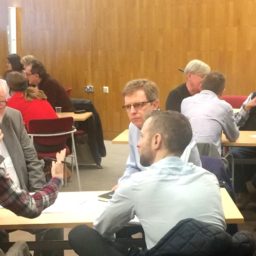
The Art of Navigating Conversations Difficult Conversations Close Pop-up all posts in this chapter What’s the Vibe? Please be patient as this may take up to a minute to load… Close What is conversational continuous self-improvement? We can improve our conversational abilities through the process of conversational continuous self-improvement. Our goal is to become more Continue reading Conversational Continuous Self-improvement ** Making ongoing incremental improvements to our conversations

Polarization is reshaping how we perceive and communicate with one another. Disagreement has turned into division, and conversation into confrontation. We need new ways of talking that rebuild trust, restore understanding, and make it possible to think together across our differences. Continue reading Polarization Is Tearing Us Apart We are polarized across political, religious, moral, and racial divides

Conversation Covenant Brown-bag Lunches ** Close Pop-up all posts in this chapter What’s the Vibe? Please be patient as this may take up to a minute to load… Close What is brainstorming? Brainstorming is a popular ideation technique for generating new ideas. The basic premise is to get a group together and have them share Continue reading Brainstorming A group discussion to produce a list of ideas or solutions to a problem.

Rethink Change: In complex environments, change is not driven by individuals but by interaction. Plans fail when they ignore direction and the system’s readiness for what’s next. Real progress comes through shared movement, guided by interaction and small steps into the adjacent possible. Continue reading Rethink Change A Conversational Leadership Practice Area

In complex work, measurement can help us learn and improve—but only if we’re clear about what matters. Too often, targets are imposed without context, creating distortion instead of insight. A better way is to design measures with those doing the work, turning them into tools for shared understanding. Continue reading Measures, Targets, Rewards and Punishments When a measure becomes a target, it ceases to be a good measure

The Knowledge Café is often at its best when it is used to convene conversations to give people “a say” in topics and issues that are relevant to them. Continue reading Knowledge Cafés at the Nigerian National Petroleum Corporation Give people a voice
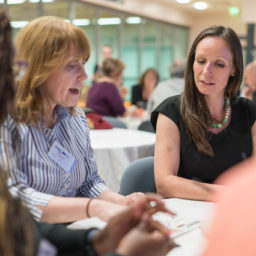
Connect more: Connect with people more broadly and more deeply. We are becoming more connected with each other and less connected with each other at the same time. Continue reading Connect More Connect more broadly, more deeply

Despite overall improvements in quality of life, our world faces numerous challenges. Global issues span personal, societal, and environmental domains and threaten long-term sustainability. Addressing these complex problems requires a better understanding and collaboration at all levels. Continue reading The Metacrisis The interconnected crises shaping our world

Knowledge Cafés at PSMA Australia Conversation in Hong Kong Close Pop-up all posts in this chapter What’s the Vibe? Please be patient as this may take up to a minute to load… Close I have been running regular Knowledge Cafés in the evenings in London since September 2002. These events are entirely free and are Continue reading Passion at the Gurteen Knowledge Café Blog post by Mathew Rees
Conversation in Hong Kong The Huawei Break the Book Community Close Pop-up all posts in this chapter What’s the Vibe? Please be patient as this may take up to a minute to load… Close On 16th March 2017, I ran a Knowledge Café in London for NetIKX (The Network for Information and Knowledge Exchange) – an independent community Continue reading Gurteen Knowledge Café: Entrenched and Entrained Thinking A blog post by Conrad Taylor
Turn-taking in Conversation Our Most Powerful Technology Is Conversation Close Pop-up all posts in this chapter What’s the Vibe? Please be patient as this may take up to a minute to load… Close Pask’s Conversation Theory, developed by British cybernetician Gordon Pask in the 1970s, is a conceptual and theoretical framework that explores how learning Continue reading Conversation Theory ** Gordon Pask
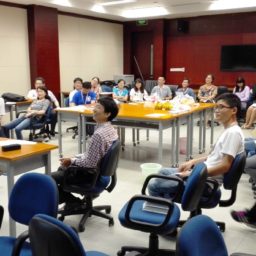
Gurteen Knowledge Café: Entrenched and Entrained Thinking Knowledge Cafés at the European Patent Office Close Pop-up all posts in this chapter What’s the Vibe? Please be patient as this may take up to a minute to load… Close The Huawei Break the Book Community is a Reading Group Café – a simple but powerful example of peer Continue reading The Huawei Break the Book Community A powerful example of peer learning

In 2006, I ran a knowledge-sharing workshop for an international organization in Zurich. As part of the workshop, I ran a Knowledge Café. The experience transformed my understanding of the power of the Café process. Continue reading Knowledge Café in Zurich, Switzerland The Knowledge Café has empowered our staff to speak up and take the initiative

During the 17th and 18th centuries, Britain witnessed the rise of various gentlemen’s clubs, which served as hubs for intellectual discourse, socializing, and the exchange of ideas. These clubs played a significant role in shaping the intellectual and cultural landscape of the time. Continue reading British Gentlemen’s Clubs Of the 17th and 18th Centuries

Admit when you are wrong: We find it difficult to admit when we are wrong. Our relationships and personal development are negatively affected by this. What can we do to improve our ability to admit we’re wrong? Continue reading Owning Our Mistakes ** Learning how admitting we’re wrong strengthens relationships and personal growth
Good conversations don’t happen by chance. Without careful planning, discussions can become unfocused, unbalanced, or ineffective. Thoughtful design helps ensure that a Knowledge Café creates the right conditions for meaningful dialogue, addressing key questions about purpose, participants, setting, and follow-up to maximize engagement and impact. Continue reading Knowledge Café: Design Checklist Knowledge Cafés should be thoughtfully designed

So often at conferences, the organizers allow little time for conversation and networking. They feel they do not have the time to spare as they need to pack in so much content. But what about before and after the conference – breakfast and dinner time Continue reading Conference Breakfasts and Dinners A great opportunity to network and build relationships

Effective leadership is vital for driving positive change in a complex world. However, many view leadership as a position of authority rather than a practice accessible to all. We can create a more engaged and sustainable society by recognizing that anyone can develop leadership skills and influence others. Continue reading Leadership Is a Practice Not a Position of Authority Anyone can practice leadership

Teams often lose momentum when they don’t pause to connect. Long meetings aren’t always the answer. A short, informal huddle can keep communication flowing and priorities clear without disrupting the day. Continue reading The Power of Team Huddles How brief team gatherings can align, motivate, and connect

Randomised Coffee Trials (RCTS) are a way of connecting people in an organization at random to give them time to meet to have a coffee and talk about whatever they wish. Continue reading Randomised Coffee Trials at Red Cross Red Crescent Virtual coffee meetings across the globe

The Power of Team Huddles Ongoing Performance Conversations Close Pop-up all posts in this chapter What’s the Vibe? Please be patient as this may take up to a minute to load… Close The Oracy Lab is an experimental space for exploring the power and possibilities of conversations and spoken communication for conveying meaning and co-creating Continue reading The Oracy Lab An experimental space for exploring the power and possibilities of conversations

Espresso Café Ritual Dissent Café ** Close Pop-up all posts in this chapter What’s the Vibe? Please be patient as this may take up to a minute to load… Close A Knowledge Café usually begins with a short talk and a question, but there are other ways to set the context. A Café Debate introduces Continue reading Knowledge Café Debate Debate sharpens up the important aspects of the issue under discussion
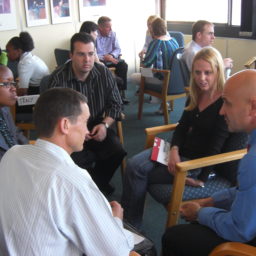
Collective Sense-making Café ** Ideation Café Close Pop-up all posts in this chapter What’s the Vibe? Please be patient as this may take up to a minute to load… Close There are several ways to obtain people’s opinions and feedback. Surveys, interviews, and focus groups are three of the most common. The Focus Group Café Continue reading Focus Group Café An improvement on traditional focus groups?

The Oracy Lab Open Space Conversations Close Pop-up all posts in this chapter What’s the Vibe? Please be patient as this may take up to a minute to load… Close The days of the traditional annual or semi-annual performance review are coming to an end at many companies. These formal reviews are being replaced by Continue reading Ongoing Performance Conversations From annual performance reviews to on-going performance conversations
Group Polarization Facilitator Bias ** Close Pop-up all posts in this chapter What’s the Vibe? Please be patient as this may take up to a minute to load… Close What is social loafing? Social loafing primarily happens when we unconsciously or consciously put less effort into a task when part of a group than when Continue reading Social Loafing The tendancy to put less effort into a task when we are part of a group

Intimate Conversations Al Jazeera Cafe Close Pop-up all posts in this chapter What’s the Vibe? Please be patient as this may take up to a minute to load… Close Customer satisfaction surveys often rely on brief, limited questions that don’t capture the whole picture. This method can lead to overlooked feedback and biased responses. The Continue reading Hong Kong MTR Coffee Evenings and Liaison Trains An improvement over traditional customer surveys
A Peer Assist is a conversational method that brings together a group of peers to elicit feedback on a problem, project or activity, and draw lessons from the participants’ knowledge and experience. An introduction to peer assists Continue reading Peer Assist Learn from your peers; someone has already done it

In many communities, persistent problems such as malnutrition or disease often resist top-down solutions. Too often, experts overlook the hidden knowledge already present within the system. Positive Deviance offers a way forward by uncovering uncommon yet successful behaviors already practiced by insiders and building change from within. Continue reading Positive Deviance in Action How everyday outliers spark lasting community change