I think “knowledge management” is a bullshit issue. Let me tell you why. I can give you perfect information, I can give you perfect knowledge and it won’t change your behavior one iota. People choose not to change their behavior because the culture and the imperatives of the organization make it too difficult to act upon the knowledge. Knowledge … | Michael Schrage Continue reading Knowledge Management Is a Bullshit Issue Michael Schrage

Introduction to Leading Issues in Social Knowledge Management A brief and personal history of Knowledge Management! In its early days, Knowledge Management (KM) was primarily about capturing all the messy unstructured information in an organization; making it searchable and easily accessible to employees. It’s still what most companies mean when they talk about KM – Continue reading Leading Issues in Social Knowledge Management by David Gurteen (2012)
Knowledge Management helps us organise and share information, but it cannot do the thinking for us. Knowledge only comes alive when people talk, question, and reason together. By practising Conversational Leadership, we build on Knowledge Management and actively engage our collective intelligence. | David Gurteen Continue reading Knowledge Management Is Not Enough David Gurteen
Our most effective knowledge management tool is conversation. The words we choose, the questions we ask, and the metaphors we use to explain ourselves are what determine our success in creating new knowledge as well as sharing that knowledge with each other. | Nancy Dixon Continue reading Our Most Effective Knowledge Management Tool Is Conversation Nancy Dixon

Technology and Democracy The Dialogic Mindset: Learning Emergent Change in a Complex World Posts that link to this paper David Gurteen Biography Speaker, writer and conversational hostPeople: David Gurteen (1)David Gurteen Keynote speaker, writer and conversational facilitatorBooks: David Gurteen (80)A Conversation Architect Designs Strategic Conversations David GurteenAPM Conference: Conversational Leadership David Gurteen (2016)Being Truthful Versus Telling Continue reading Ten Years in Knowledge Management David Gurteen
Knowledge is not a commodity to be stored and retrieved; it is a living, breathing entity birthed from the intricate dance of human interaction. It is a vibrant tapestry woven from the threads of human and non-human actors, engaged in a dynamic, ever-evolving network of collaboration and competition. People are not footnotes in this narrative; we are the heart and soul of KM. | David Griffiths Continue reading Knowledge Is Not a Commodity to Be Stored and Retrieved David Griffiths (2023)
Abstract This paper examines critically the origins and basis of ‘knowledge management’, its components, and its development as a field of consultancy practice. Problems in the distinction between ‘knowledge’ and ‘information’ are explored, as well as Polanyi’s concept of ‘tacit knowing’. The concept is examined in the journal literature, the Web sites of consultancy companies, Continue reading The Nonsense of ‘knowledge Management’ Tom Wilson (2002)
There’s no such thing as knowledge management; there are only knowledgeable people. Information only becomes knowledge in the hands of someone who knows what to do with it. | Peter Drucker Continue reading There’s No Such Thing as Knowledge Management Peter Drucker
Description This is an article on Societal Knowledge Management that looks at the future of Knowledge Management. I wrote it for the Henley Forum and it was published in May 2021. It draws on and is linked to much of the material in this blook. Author David Gurteen Article Size and Structure of Freely Forming Continue reading Societal Knowledge Management David Gurteen (2021)

Posts where this video is embedded Don’t Do Knowledge Management You respond to business problems & develop business opportunities using KM toolsPeople: David Gurteen (1)David Gurteen Keynote speaker, writer and conversational facilitatorBooks: David Gurteen (80)A Conversation Architect Designs Strategic Conversations David GurteenAPM Conference: Conversational Leadership David Gurteen (2016)Being Truthful Versus Telling the Truth David GurteenChatbot Constraints Continue reading Don’t Do Knowledge Management David Gurteen, 2011
Introduction The objective is simple: “Better decision-making.” The only issue is that there are so many different views over what we mean by “better.” At the core of all decision-making is the need to balance Power with Responsibility, as the vehicle for resolving the “better” question. This article explores why that is so difficult? It Continue reading The Issues at the Core of Ethical Decision-making and Leadership Bruce Lloyd (2009)

Dave Snowden is a Welsh management consultant and researcher in the field of knowledge management. Known for the development of the Cynefin framework, he is the founder and chief scientific officer of The Cynefin Company, a Singapore-based management consulting firm specializing in complexity and sensemaking. I have known Dave for many years and follow his Continue reading Dave Snowden Management Consultant
For all our knowledge, we have no idea what we’re talking about. We don’t understand what’s going on in our business, our market, and our world. Knowledge Management shouldn’t be about helping us to know more. It should be about helping us to understand. So, how do we understand things? It’s through stories that we understand how the world works. | David Weinberger Continue reading For All Our Knowledge, We Have No Idea What We’re Talking About David Weinberger
In this book, Curious, Ian Leslie makes a passionate case for the cultivation of our “desire to know.” Drawing on fascinating research from psychology, economics, education, and business, Ian looks at what feeds curiosity and what starves it and finds surprising answers. Curiosity is a mental muscle that atrophies without regular exercise and a habit Continue reading Curious: the Desire to Know and Why Your Future Depends on It by Ian Leslie (2014)
Our approach to Knowledge Management is far more than stick or carrot. We say, “Knowledge Sharing is your job. Do it! As a reward, you may keep your job.” | Bob Buckman Continue reading Knowledge Sharing Is Your Job. Do It! Bob Buckman
Knowledge Management should be focused on real, tangible intractable problems not aspirational goals. It should deal pragmatically with the evolutionary possibilities of the present rather than seeking idealistic solutions. | Dave Snowden Continue reading Knowledge Management Should Deal with the Evolutionary Possibilities of the Present Dave Snowden
The Knowledge Café by Benjamin Anyacho is a mindset and environment for engaging, discussing, and exchanging knowledge within a group, either face-to-face or virtually. At the café, participants can discuss hard-to-solve project issues or resolve a family or community crisis. This metaphorical town square supports knowledge circulation and rejuvenation and increases its velocity—making it a breeding ground for Continue reading Knowledge Café: Create an Environment for Successful Knowledge Management by Benjamin C. Anyacho
The secret to successful Knowledge Management is simple: link it to what keeps the CEO awake at night. | David Gurteen Continue reading The Secret to Successful Knowledge Management David Gurteen
Nancy Dixon is a researcher and consultant who focuses on the people side of knowledge management. Nancy is a good friend and we are working closely together along with John Hovell to develop the concept of Conversational Leadership. Sharing Tacit Knowledge – the story about Xerox Copy Repair Technicians | Nancy Dixon WebsiteCommon Knowledge AssociatesLinkedinNancy DixonBlogConversation Continue reading Nancy Dixon Researcher and consultant
Abstract Higher Education Institutions are knowledge-intensive institutions. Academics are considered knowledge workers within a knowledge society, with a remit to create and transfer knowledge to their students, as well as to distribute and share the knowledge created from research undertaken. These forms of knowledge sharing within Higher Education Institutions happen as part of the role Continue reading Knowledge Sharing and Knowledge Cafés – a Case Study in Higher Education Desireé J Cranfield, Isabella M Venter, Sue Evans, Ellen Spender
John Hovell is a practitioner, speaker, and author in OD/KM strategies. John is a good friend; we are working closely to develop . LinkedinJohn HovellX (Twitter)@klowey22YouTubeJohn HovellGoogleJohn HovellPosts: John Hovell (2)C-group Develop your interpersonal and conversational skillsThree Questions for Meaningful Conversations Clarify focus, approach, and community-building in discussionsBooks: John Hovell (3)C-group Develop your interpersonal and Continue reading John Hovell Practitioner, speaker, and author in OD/KM strategies
Abstract Since March 2020, the pandemic has changed the way teaching within Higher Education in the UK and indeed the world, is conducted. A sudden shift to online teaching necessitated a rethink of the best teaching approaches and methods to engage students and support good student experience while using the digital teaching platform as a Continue reading Knowledge Café’s, Informal Conversations, Sharing Teaching Best Practice Desireé Cranfield, David Gurteen (2020)
David Gurteen talks with Nick Stone about Conversational Leadership People: David Gurteen (1)David Gurteen Keynote speaker, writer and conversational facilitatorBooks: David Gurteen (80)A Conversation Architect Designs Strategic Conversations David GurteenAPM Conference: Conversational Leadership David Gurteen (2016)Being Truthful Versus Telling the Truth David GurteenChatbot Constraints David GurteenChatbots as Critical Thinking Partners – Talk for Bibliotheca Alexandrina Continue reading Conversational Leadership David Gurteen, 2019
Abstract The Internet of Things has brought about changes in the way we live, work and play, enabling enhanced connectedness with associated radical opportunities to improve every sector and area of our lives. Access to information is continuous, ubiquitous, time and place independent, which has revolutionized the workplace, becoming progressively complex, and continually changing. With Continue reading Teaching Innovation, Conversations, Community of Practice: Using Knowledge Cafe’s to Share Teaching Best Practice … D.J. Cranfield, D. Gurteen (2020)

Organizations and individuals face increasing complexity and uncertainty. Relying on isolated knowledge limits understanding and leads to biased decisions. Sharing ideas and insights through conversation helps people make sense of information, solve problems, and adapt to change together. Continue reading Introduction: Knowledge Management Knowledge Management is not an oxymoron

Effective Knowledge Management is crucial in today’s complex world, however, the distinction between terms like data, information, knowledge, explicit, tacit, and implicit knowledge can often be confusing. It is important to have a clear understanding of the differences. Continue reading Data, Information and Knowledge What’s the difference?

Knowledge Management helps organisations organise and share what they know. Yet information alone does not guide judgement when uncertainty, disagreement, and risk are present. Conversational Leadership builds on KM by strengthening how people think, reason, and act together when knowledge by itself is not enough. Continue reading Conversational Leadership — Beyond Knowledge Management Why Knowledge Management is not enough

We often confuse knowledge with information. This leads to strategies that prioritise documents and databases over people and understanding. To manage knowledge effectively, we need to view it as something people create and use, rather than something to be stored, and design our practices to support sensemaking, not just storage. Continue reading Knowledge Only Exists in the Mind Everything else is information

Knowledge has long been seen as power. Yet knowing something and being able to act on it are very different. Real power comes from applying what we know, working with others, and influencing those who can make change happen. Knowledge only matters when it leads to action. Continue reading Knowledge Is Not Power Our ability to influence people is power

Knowledge Management and Information Management are often conflated, but this confusion can be resolved by understanding the clear distinction between knowledge and information. Continue reading Knowledge and Information Management (KIM) Distinguishing Knowledge Management from Information Management

Knowledge Management has evolved since the mid-90s, shifting from managing information to building collective knowledge. The challenge lies in adapting KM practices to meet today’s complex needs. A four-level framework can provide a structured approach, helping organizations move from information management to supporting agency and communityship. Continue reading The Four Levels of Knowledge Management The relation between Conversational Leadership and Knowledge Management

Each organisation has its own goals, culture, and challenges. A Knowledge Management strategy risks missing what really matters. To make a difference, we need to understand the business first, then shape knowledge practices that support how people actually work and how the organisation really succeeds. Continue reading Make Knowledge Management part of the business Strictly speaking, there is no such thing as a KM strategy

Organizations often talk about Knowledge Management as if it’s a goal in itself. But KM is not the destination. It’s a set of tools, methods, and mindsets that help solve real problems and support meaningful business outcomes. When treated as a separate initiative, KM risks becoming disconnected from what truly matters. Continue reading Don’t Do Knowledge Management You respond to business problems & develop business opportunities using KM tools

Knowledge Management and artificial intelligence intersect in exciting ways. GenAI tools like ChatGPT are often considered alternatives to traditional search engines like Google. However, in this mode, they primarily help manage information rather than supporting Knowledge Management. Continue reading Chatbots and Genai in Knowledge Management Chatbots are more than just question/answer machines

Knowledge exists in our minds, and traditional methods of encoding this knowledge into information face significant challenges. However, AI tools now offer innovative solutions for recording, transcribing, and processing both explicit and tacit knowledge, revolutionizing how organizations preserve and leverage their intellectual capital. Continue reading From Mind to Information – the Role of AI in Knowledge Encoding The Evolution of Knowledge Encoding

Knowledge Management tends to thrive only when the business is booming. When profits fall and budgets shrink, it is one of the first things to go. The answer is to make its value unmistakable by linking it directly to the organisation’s goals, performance, and long-term capability. Continue reading When Knowledge Management Means Kill Me When budgets tighten, KM is often the first to go

Knowledge Management often inherits rigid planning models from the business world. However, in complex environments, control-based strategies are ineffective. A more effective KM strategy creates the proper context for knowledge to flow, supporting how people learn, collaborate, and solve problems in real time. Continue reading Rethinking Knowledge Management Strategy Aligning knowledge efforts with real business needs

Knowledge Management has long relied on incentives to encourage people to share what they know. These rewards often increase visible activity while quietly distorting motivation, trust, and judgment over time. A different approach focuses on conditions and relationships, in which knowledge sharing emerges through participation rather than being driven by rewards. Continue reading Why Incentives Undermine Knowledge Sharing A critique of traditional knowledge management thinking

Many organizations rely on SharePoint to manage what they call knowledge. The problem is that storing documents and supporting communication and coordination is not the same as sharing understanding. Real knowledge work happens through people, relationships, and conversations, not within folders and files. Continue reading SharePoint Is Not a Knowledge Management System How software systems confuse information with knowledge

Knowledge Management is often treated as a technical discipline, tied to platforms, repositories, and formal processes—this framing mistakes information storage for understanding, judgement, and intelligent action in real situations. A different view sees KM as a practice rooted in sensemaking, conversation, and everyday decisions. Continue reading Knowledge Management Is a Practice ** Sensemaking, conversation, and everyday practice
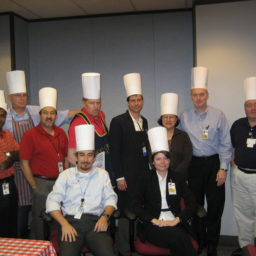
You can adapt the Knowledge Café process in a variety of ways and put the Café to a multiplicity of different purposes. This series of Knowledge Cafés ran by NASA was used to identify risk issues and how to mitigate those risks. Continue reading Knowledge Cafés at NASA Identifying risk issues, and meaningful mitigation approaches

Knowledge Cafés at the Nigerian National Petroleum Corporation Passion at the Gurteen Knowledge Café Close Pop-up all posts in this chapter What’s the Vibe? Please be patient as this may take up to a minute to load… Close This is a story written by Alison Jones, a Knowledge Manager at PSMA Australia, in which she Continue reading Knowledge Cafés at PSMA Australia Using the Knowledge Café process to run a Knowledge Management Forum
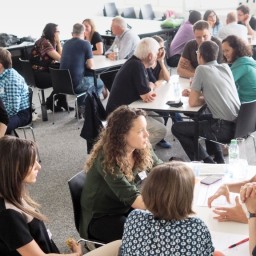
The Knowledge Café is a conversational method that gathers a group of people to share knowledge and experiences, learn from one another, build relationships, and make better sense of a rapidly changing, complex, less predictable world. The aim is to improve decision-making, innovation, and collaboration. Continue reading Introduction: Knowledge Café Improving decision-making, innovation, and collaboration

Knowledge Management is still widely framed as delivering the right information to the right people at the right time. That framing reduces knowledge to content and turns a human practice into a technical delivery problem. A more useful view treats knowledge as something that emerges through interpretation, conversation, judgement, and action. Continue reading Knowledge Management Is NOT About Delivering the Right Information to the Right People at the Right Time. Moving beyond classic KM thinking

We rely on different ways to know what is true. Some are reliable, but others mislead us more often than we realise. By understanding the limits of custom, authority, and intuition, and focusing on more dependable approaches like observation, logic, and evidence, we can make better sense of the world. Continue reading Ways of Knowing Ways of acquiring knowledge

Life is short and uncertain, yet much of our thinking remains fixed on distant goals. The future is unpredictable, and plans often falter in the face of complexity. Paying attention to what is happening now may be the wiser path, acting in the present rather than waiting for the perfect moment. Continue reading Carpe Diem – Seize the Day Seize the day everyone
Knowledge Management tends to focus on the management of information in the belief that if we have more information, better quality information, and more accessible information, we will do our jobs better. This belief is just not true. We need more Continue reading We Know So Much but Understand So Little It is through conversation we make sense of the world

Knowledge Management often relies on metaphors like “sharing” or “capturing” knowledge. These terms blur the crucial difference between knowledge and information, creating confusion. Clear thinking begins by recognizing that only information can be stored or transferred. In contrast, knowledge itself remains personal, contextual, and shaped by human interaction. Continue reading When Metaphors Get Knowledge Wrong Why common knowledge management terms mislead our thinking