

In the 17th and 18th centuries, London’s coffee houses bridged social divides, creating inclusive spaces for conversation. The rigid class hierarchy limited interaction elsewhere, stifling exchange. Coffeehouses provided an egalitarian setting for diverse perspectives, sparking ideas that fueled political movements, scientific progress, and transformative business ventures.
The intent of these stories is to stimulate deeper thinking about innovation and inspire us—whether as managers or individuals—to adapt these insights to our own ways of working and our workplaces, discovering opportunities for improvement and creativity.
In the 17th and 18th centuries, London’s coffeehouses became hubs of unparalleled innovation and exchange, fostering a unique environment where people from diverse social, economic, and intellectual backgrounds came together.
Unlike other gathering places, coffeehouses provided a space where rank, title, and wealth held less sway, creating an environment rich in conversation and collaboration. They became incubators of ideas, sparking everything from revolutionary business ventures to political movements, scientific discoveries, and artistic creativity.
This was where minds met, ideas collided, and innovations emerged in ways that would profoundly shape the modern world.
The Coffee House Culture: A Melting Pot of Minds
At a time when social hierarchy was rigid and movement between classes was limited, coffeehouses disrupted these divisions. They attracted a diverse array of individuals, including merchants, politicians, poets, philosophers, scientists, and laborers. Coffeehouses had a policy of inclusion: anyone who could afford a penny could join in the discussions and debates. They offered an egalitarian atmosphere where ideas, not titles, were the currency of exchange.
In this way, coffeehouses became the perfect breeding ground for innovation. The diversity of backgrounds and viewpoints present largely drove the cross-pollination of ideas that occurred within their walls. In an era when knowledge was not readily accessible, these spaces facilitated the dissemination of information and challenged established norms. The mixing of men from different fields created a confluence of perspectives, fostering an environment that stimulated creativity and unconventional thinking.
Innovation through Interaction and Conversation
The emphasis on conversation in coffeehouses laid the groundwork for what we today recognize as interdisciplinary collaboration. Here, scholars and scientists could exchange ideas directly with merchants and sailors who had firsthand experience of the wider world. This fluid exchange led to groundbreaking developments in science and commerce. It’s in these coffee houses that the Royal Society, England’s prestigious scientific institution, was born, driven by a culture of inquiry, experimentation, and open discussion. Conversations ranged from the empirical to the speculative, with individuals sharing their observations, experiments, and theories in ways that spurred others to think more broadly and question more deeply.
Political debate also flourished in coffee houses, as people discussed pamphlets and current events with a level of freedom rarely tolerated elsewhere. This environment of free speech became so powerful that Charles II attempted to suppress coffeehouses, fearing their influence on political dissent. Yet, the coffeehouse culture persisted, and it played a crucial role in the intellectual and social movements that followed.
The Exchange of Ideas: Where Business and Commerce Thrived
The coffee house culture was incredibly influential in shaping the business landscape. For merchants, brokers, and ship captains, coffee houses served as informal offices where deals were struck and partnerships forged. One of the most notable examples was Edward Lloyd’s coffeehouse, which became the birthplace of Lloyd’s of London, the renowned insurance market. Merchants gathered at Lloyd’s to share information on shipping routes, risks, and losses, eventually establishing a collaborative system of underwriting that allowed them to mitigate risks associated with trade.
This blend of business with social interaction laid the foundation for modern finance and insurance. Coffeehouses gave rise to stock exchanges and financial markets by bringing together those with capital and those seeking investment, all within an informal and accessible setting. This freewheeling style of commerce helped make London a center of global trade and finance, a legacy that continues to this day.

 Lloyd’s of London traces its roots back to a bustling coffeehouse on Tower Street in the late 1600s, where Edward Lloyd hosted merchants, ship owners, and traders. Edward’s coffeehouse quickly became a lively center for maritime news and business, with patrons discussing ship voyages, weather forecasts, and risky ventures. At the time, sea voyages were perilous, threatened by storms, piracy, and unpredictable waters, leading many traders to seek ways to protect their investments.
Recognizing an opportunity, Edward Lloyd provided his patrons with valuable shipping information. He introduced them to underwriters—individuals willing to share the financial risk of these ventures in exchange for a premium. These early partnerships laid the groundwork for modern insurance, with each voyage meticulously recorded in ledgers. Over time, Lloyd’s evolved from a simple coffeehouse into a globally respected insurance market. What began with a coffee-fueled vision of shared risk and trust has grown into a financial powerhouse that now manages over £35 billion in gross premiums, insuring everything from ships to satellites. Today, Lloyd’s of London is one of the most influential institutions globally, with a legacy rooted in collaboration and innovation.
A Lasting Legacy of Collective Intelligence and Social Learning
The London coffeehouses demonstrated an early form of collective intelligence. By pooling knowledge, experience, and insights, patrons could solve problems, innovate, and learn from one another in real-time.
They illustrated the power of networks and the strength of ideas that emerge from collaborative environments rather than solitary reflection.
These venues helped establish a cultural appreciation for dialogue and debate that would become fundamental to the British Enlightenment and the progress of modern society.
The coffee houses’ focus on open dialogue and interaction resonates with the concept of Conversational Leadership, where diverse groups come together to share perspectives, challenge each other’s assumptions, and co-create solutions. In many ways, these establishments were proto-think tanks, illustrating that when people engage in face-to-face conversations in an open environment, they are more likely to generate transformative ideas.
Where good ideas come from | Steven Johnson (source)Conclusion: The Coffee House as a Catalyst for Innovation
The London coffeehouses were far more than just places to drink coffee. They were environments that dissolved barriers, encouraged discourse, and invited every voice into the conversation. Their legacy reminds us of the power of gathering spaces, physical or virtual, that promote open exchange, inclusivity, and curiosity.
In today’s world, where innovation is often sought through structured programs and siloed teams, the example of London’s coffeehouses shows us the value of informal, organic networks of conversation. By fostering a culture where ideas are freely shared and debated, we can create our own spaces for innovation and growth, inspired by the spirit of the vibrant, idea-rich coffeehouses of 17th- and 18th-century London.
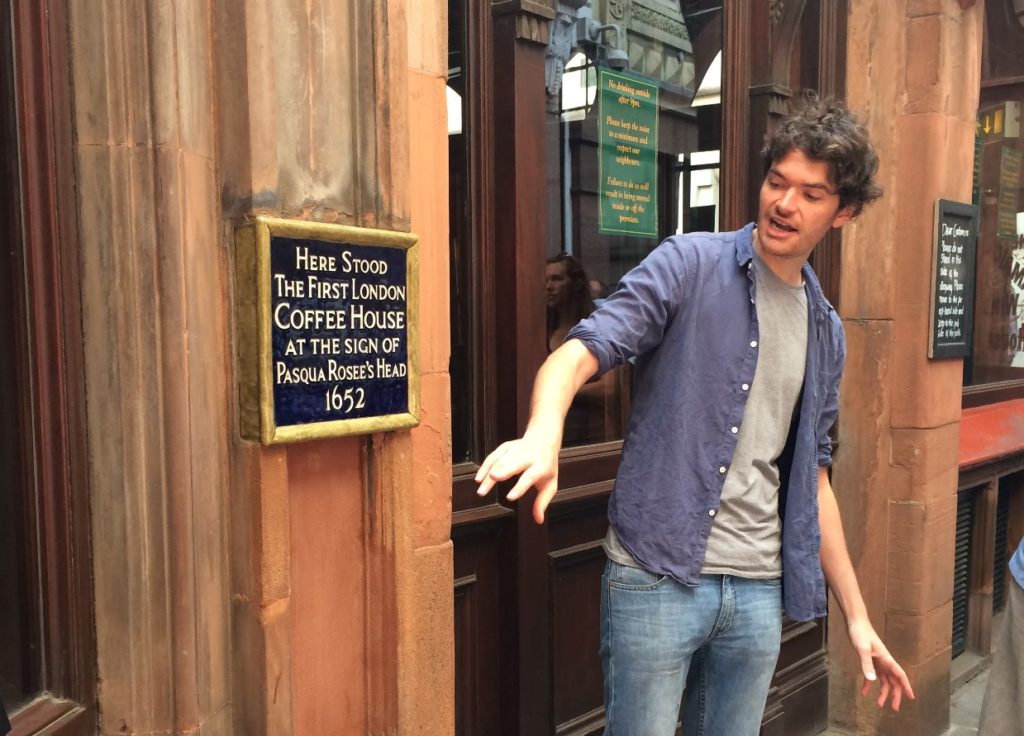
The legacy of London’s coffeehouses reminds us to create physical or virtual spaces where ideas can freely flow and diverse perspectives are welcome. Encouraging open dialogue can cultivate environments that spark creativity, foster connections, and inspire meaningful change.
Innovation Stories
- Building 20 at MIT Innovation Story: A humble wartime lab that sparked a legacy of innovation and collaboration
- Coffee House Innovation Innovation Story: The London coffee houses that fueled conversation, innovation, and societal shifts
- Rules of the Garage: Reigniting Innovation at HP Innovation Story: How Carly Fiorina’s Manifesto Modernized the HP Way
- Silicon Valley Versus Route 128 Innovation Story: How Silicon Valley's open culture outpaced Route 128's closed network
- The Birth of Uber Innovation Story: How everyday frustrations and collaboration shaped Uber’s global transformation
- The Google 20% Free Time Policy Innovation Story: A catalyst for innovation
- The House of Wisdom Innovation Story: An Islamic beacon of innovation and collaboration
- The Pixar Way Innovation Story: Lessons from Pixar on blending ideas, technology, and storytelling
POST NAVIGATION
CHAPTER NAVIGATION
SEARCH
Blook SearchGoogle Web Search
Photo Credits: Midjourney ()
The Gurteen Knowledge Letter is a free monthly newsletter with over 20,000 subscribers that I have been publishing by email for over 20 years.
Learn more about the newsletter and register here.